Oily Skin vs Dry Skin: What’s the Real Difference (And Why It Matters More Than You Think)
Most people think they know their skin type.
You either feel oily, or you feel dry.
It seems simple enough.
But if you’ve ever tried to actually manage your skin, you’ve probably noticed something confusing:
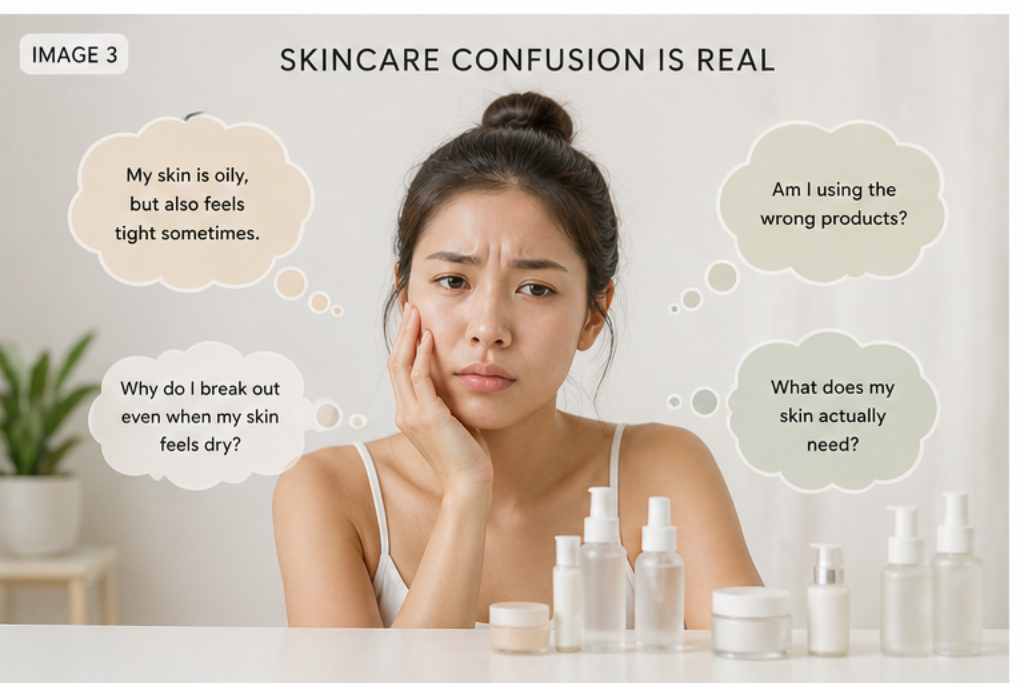
Sometimes your skin feels oily—but also tight.
Sometimes it feels dry—but still breaks out.
And that’s when the simple categories stop making sense.
Because in reality, oily and dry skin aren’t always opposites.
They’re often just different ways your skin reacts to imbalance.
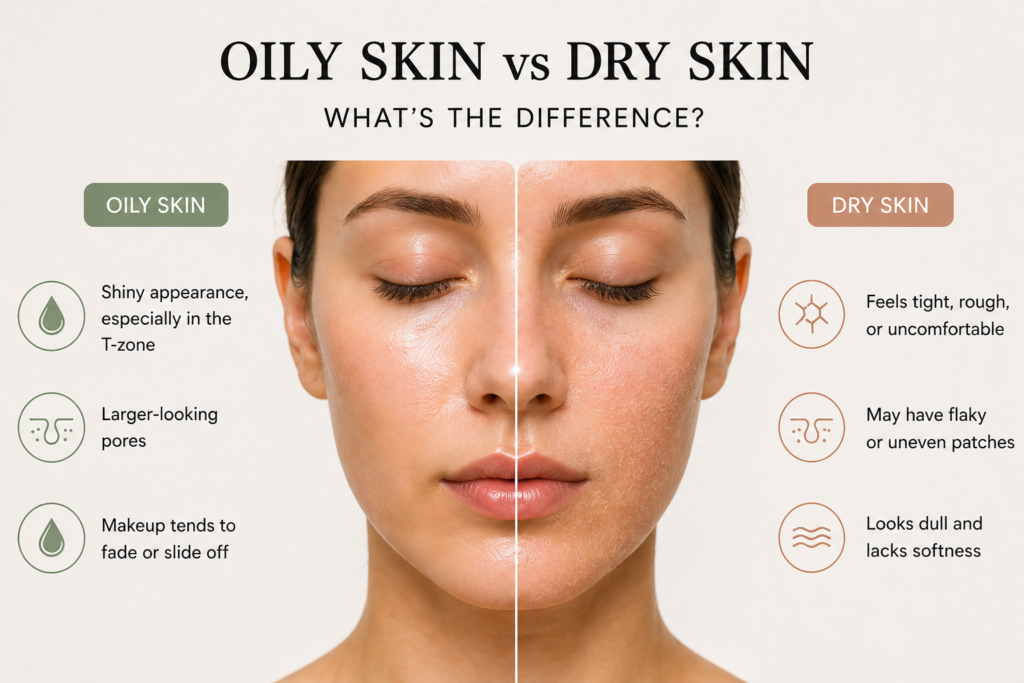
Why the Basic Definitions Don’t Tell the Full Story
The usual explanation is straightforward:
- oily skin = too much oil
- dry skin = not enough moisture
And while that’s technically true, it’s not complete.
Because your skin doesn’t operate in isolated categories.
It responds to:
- environment
- habits
- internal balance
- product use
So what you’re seeing on the surface is often a response—not the root cause.
What Oily Skin Actually Feels Like
Oily skin is usually described as shiny or greasy.
But the experience is a bit more layered than that.
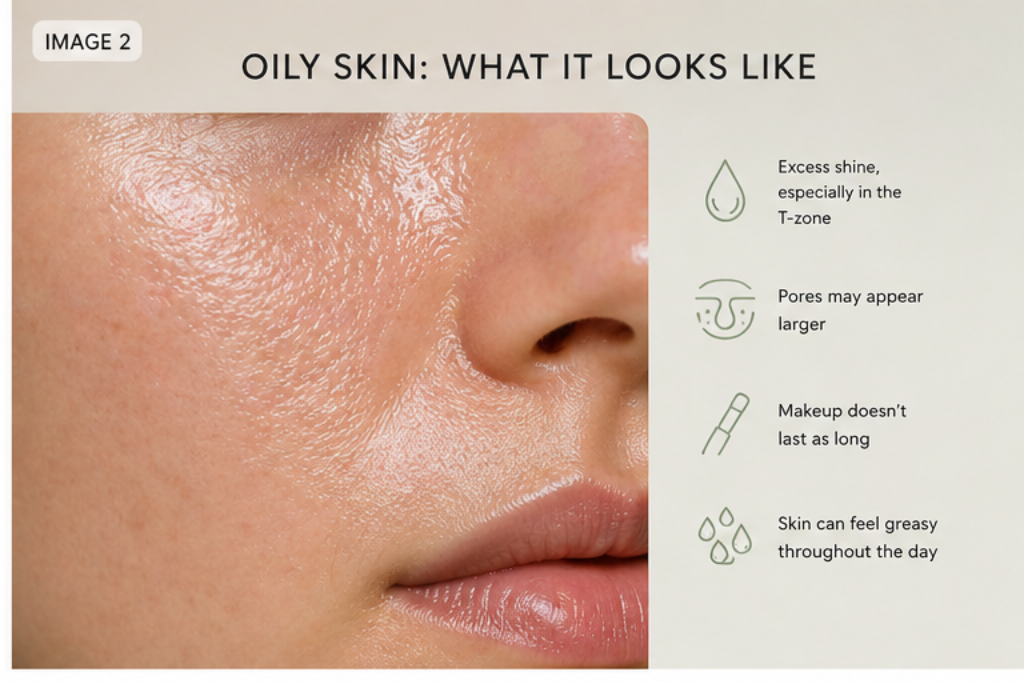
It can look like:
- excess shine, especially in the T-zone
- makeup not staying in place
- pores appearing more visible
But interestingly, oily skin doesn’t always feel “healthy.”
In some cases, it can feel unstable—like your skin is overcompensating for something.
What Dry Skin Actually Feels Like
Dry skin is easier to recognize at first.
It often feels:
- tight
- rough
- slightly uncomfortable
Sometimes there’s visible flaking.
Sometimes it’s just a subtle lack of softness.
But similar to oily skin, dryness isn’t always as simple as “not enough moisture.”
It’s often connected to how well your skin holds onto what it has.
The Overlap Most People Don’t Expect
Here’s where things get interesting.
You can have:
👉 oily skin that is actually dehydrated
👉 dry skin that still produces oil in certain areas
This is why people get confused.
Because they try to treat one condition, while the underlying issue is something else.
For example:
- stripping oil too aggressively → skin produces more oil
- not supporting moisture retention → dryness continues
It becomes a cycle.
Why Your Skin Might Feel Both Oily and Dry
This is more common than most people think.
And it usually comes from imbalance.
Your skin tries to maintain stability.
When something disrupts that balance, it reacts.
Sometimes that reaction looks like:
- excess oil production
- increased dryness
- uneven texture
So instead of asking:
👉 “Am I oily or dry?”
It’s often more useful to ask:
👉 “What is my skin reacting to?”
The Role of Your Skin Barrier (Again, This Matters)
If there’s one factor that connects both oily and dry skin, it’s the skin barrier.
When your barrier is stable:
- moisture stays in
- oil production stays balanced
When it’s disrupted:
- moisture escapes → dryness
- skin compensates → oiliness
So both conditions can actually come from the same root issue.
That’s why treating only the surface doesn’t always work.
Why Many Skincare Routines Make It Worse
This is one of the biggest problems.
People often choose products based on labels:
- “for oily skin”
- “for dry skin”
But if the underlying condition isn’t accurate, those products can push your skin further out of balance.
For example:
- using strong cleansers → removes too much → triggers oil
- using heavy creams incorrectly → feels suffocating → causes imbalance
It’s not about the product being wrong.
It’s about the match not being right.
A More Realistic Way to Approach Your Skin
Instead of trying to fit into a category, it helps to observe patterns.
Ask yourself:
- when does your skin feel most stable?
- what changes seem to trigger imbalance?
- what actually feels comfortable over time?
Because your skin type isn’t always fixed.
It shifts depending on your habits and environment.
Why Balance Matters More Than Type
This is the part most people miss.
Your goal isn’t to “fix oily skin” or “fix dry skin.”
It’s to bring your skin closer to balance.
Because balanced skin tends to:
- feel more comfortable
- look more even
- respond better to simple routines
And that’s where long-term improvement happens.
What Actually Helps (Without Overcomplicating It)
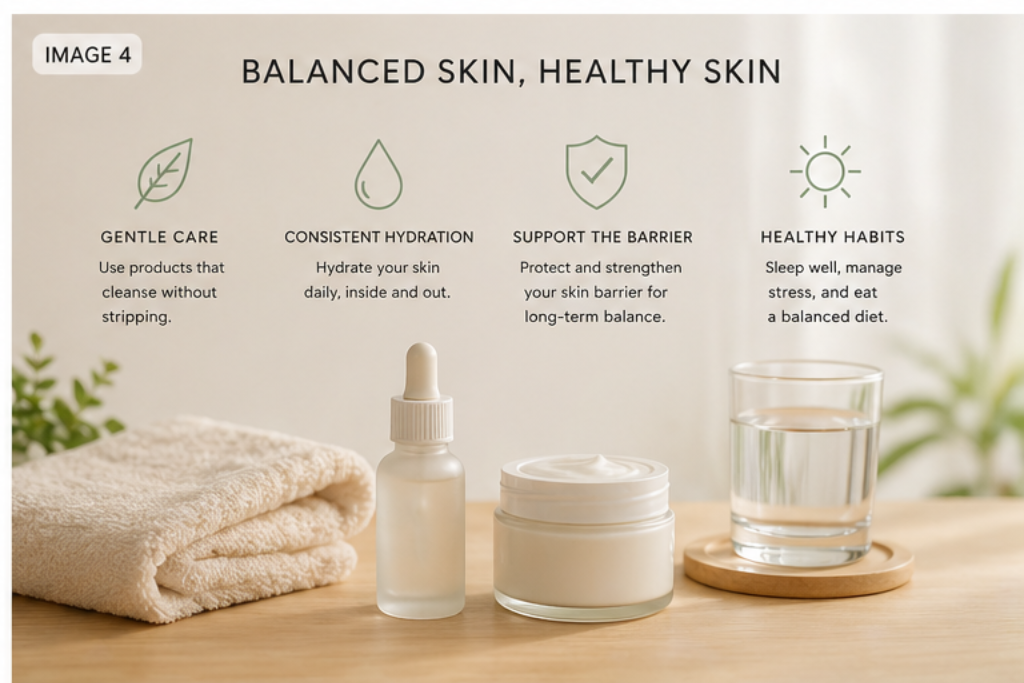
Instead of extreme approaches, focus on:
- gentle cleansing
- consistent hydration
- supporting your skin barrier
- avoiding sudden changes
These aren’t dramatic solutions.
But they’re reliable.
Final Thoughts
Oily skin and dry skin aren’t as separate as they seem.
They’re often just different signals from the same system.
And once you start looking at your skin as something that responds—rather than something that needs to be fixed—the approach becomes clearer.
Not perfect.
Not immediate.
But much more consistent.
Leave a Reply