Most people think of skin as just the surface of the body.Something we wash, moisturize, or occasionally worry about when breakouts appear. But your skin — especially the outermost layer called the skin barrier — is doing far more work than most people realize.
In many ways, your skin acts like protective wrapping around the human body.
That might sound simple, but it’s actually a very accurate way to think about it. The human body is made up of roughly 70% water. Without skin holding everything together and protecting that moisture, the body would struggle to survive. Beneath the surface, we are much softer and more delicate than we appear.
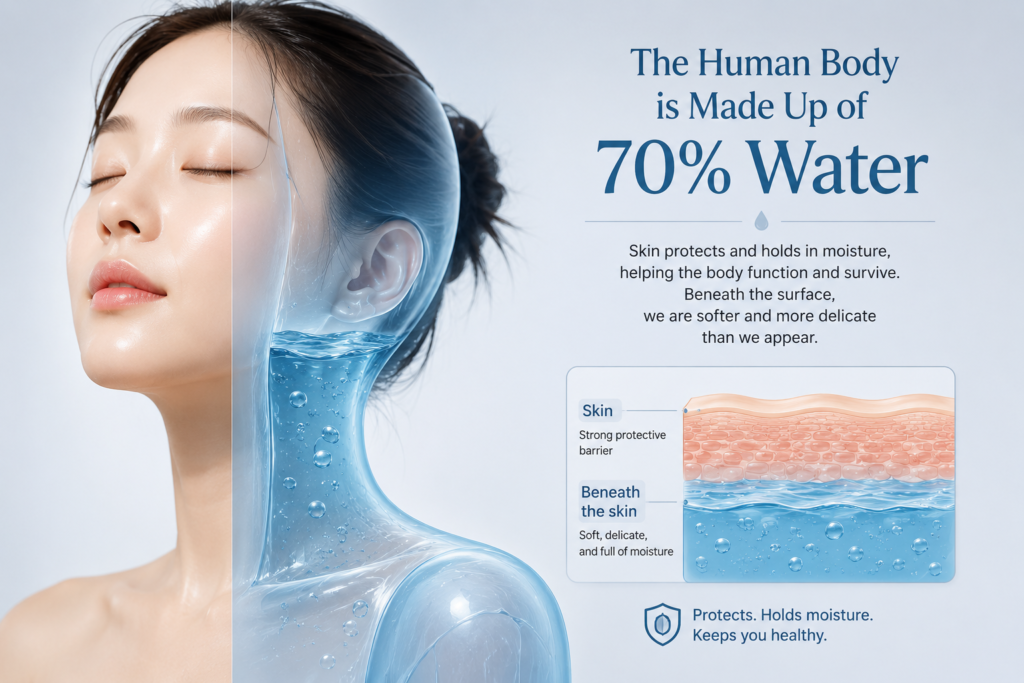
The outer layer of the skin, often called the epidermis or skin barrier, plays a critical role in keeping moisture inside while blocking harmful things from entering from the outside. Pollution, bacteria, harsh weather, and UV rays all hit the skin first.
This is why the skin barrier is so important.
Healthy skin is not only about looking smooth or glowing. A strong skin barrier helps the body maintain balance and protects deeper layers of the skin from damage.
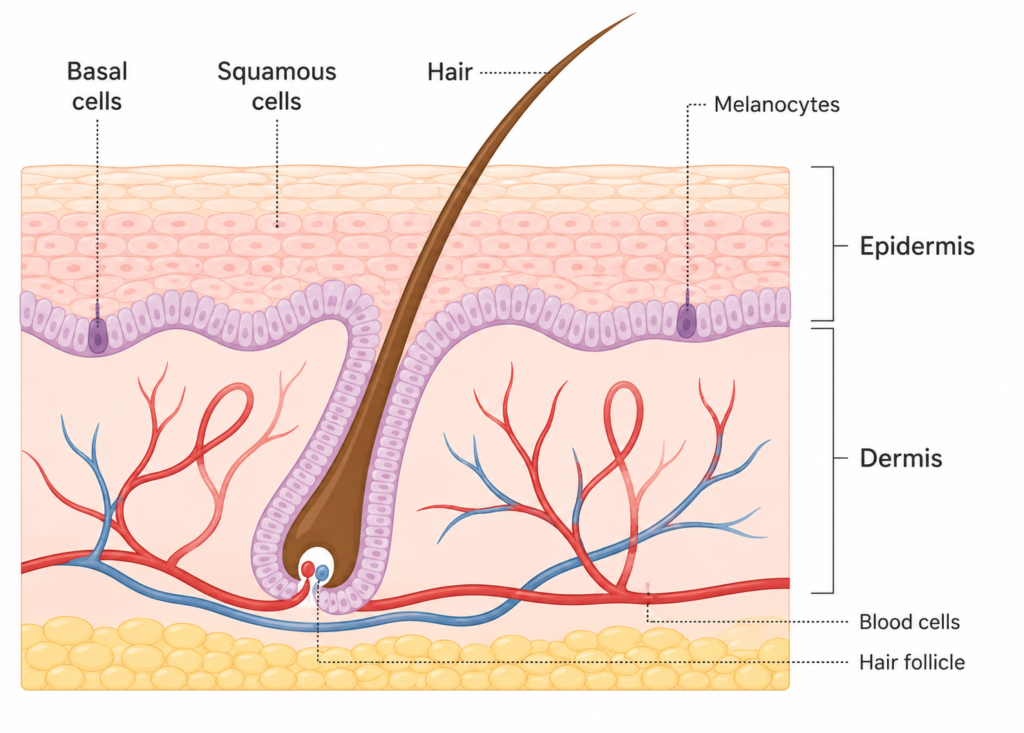
One interesting thing about the epidermis is that it constantly renews itself. Skin cells are continuously created deep within the skin and slowly move upward before eventually shedding away. In younger skin, this process happens relatively quickly. As we age, skin turnover slows down, which is one reason skin can start looking duller or rougher over time.
The problem is that many people try too hard to “force” fresh skin.
Over-exfoliating, harsh peeling treatments, and aggressive skincare routines may temporarily make the skin feel smoother, but they can also weaken the skin barrier if done too often. This is especially common in people in their 20s who use strong exfoliating products too frequently in pursuit of perfectly clear skin.
Ironically, damaging the barrier in the process can lead to more sensitivity, dryness, redness, and irritation later on.
Your skin barrier also has a surprisingly intelligent structure when it comes to protecting against sunlight. The outermost dead skin cells are arranged in overlapping layers, almost like roof tiles. Instead of allowing UV rays to penetrate directly, this layered structure helps scatter and reflect some of the sunlight away from the skin.
When the barrier becomes too thin or damaged, the skin naturally becomes more reactive. This is why sensitive skin often struggles more with sun exposure, temperature changes, and skincare products.
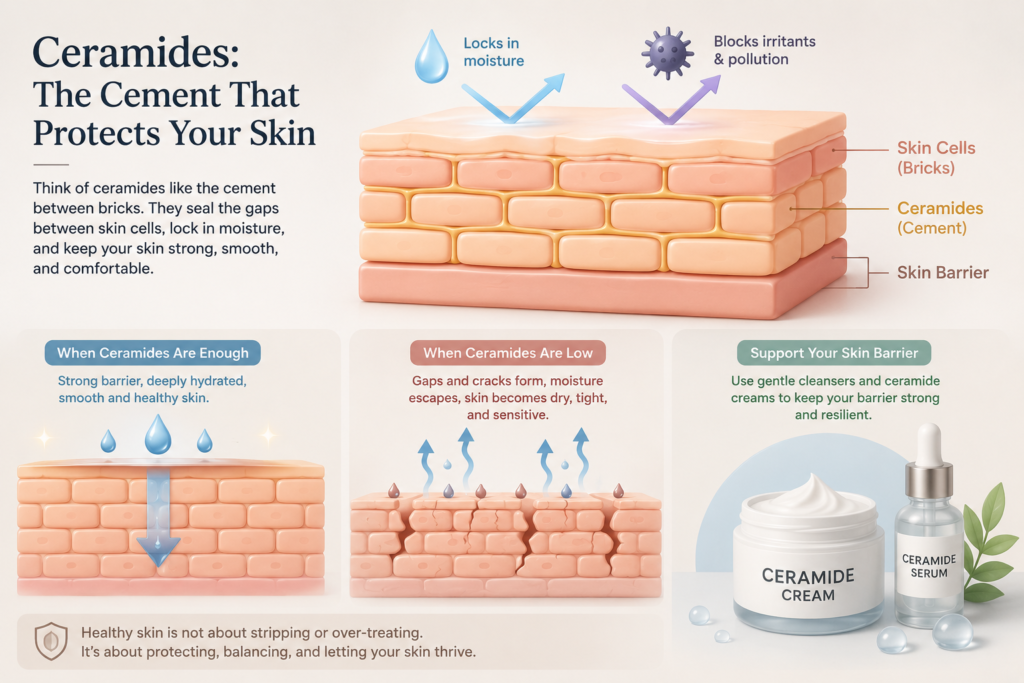
Another major part of the skin barrier is lipids — natural fats that hold skin cells together. One of the most important lipids is ceramide.
You can think of ceramides like the cement between bricks. Skin cells are the bricks, and ceramides help seal the gaps between them. Without enough ceramides, the skin barrier starts developing tiny cracks, allowing moisture to escape more easily.
This is one reason damaged skin often feels tight, flaky, or rough.
Harsh cleansers and excessive washing can strip away these protective lipids over time. Foaming cleansers with strong surfactants may leave the skin feeling “clean,” but for some people, they also weaken the barrier by removing too much natural oil.
This is why modern skincare has become increasingly focused on barrier repair rather than aggressive treatment alone.
Today, ceramide creams are extremely popular because they help reinforce the skin barrier and reduce moisture loss. Many people with dry skin, sensitive skin, or eczema notice that their skin feels calmer and stronger when they consistently use barrier-supporting products.
At the end of the day, healthy skin is not necessarily skin that has been scrubbed, peeled, or treated constantly. Often, the healthiest skin is skin that feels protected, balanced, and comfortable.
Sometimes doing less — while protecting the skin barrier properly — can actually help the skin look better in the long run.
Leave a Reply