Almost everyone has experienced this at least once.
You finish your makeup at home, look in the mirror, and think everything looks perfectly fine. The skin looks smooth, the blush feels balanced, and the lip color matches beautifully.
Then someone takes a photo.
Suddenly the foundation looks too yellow. The lipstick feels much brighter than expected. Your under-eyes look darker somehow, and the entire makeup look feels heavier or stranger than it did in real life.
It can be frustrating because nothing actually changed.
But cameras see color very differently from human eyes.
And once lighting, undertones, contrast, and photography all interact together, makeup can start behaving in unexpected ways.
Cameras Flatten the Face
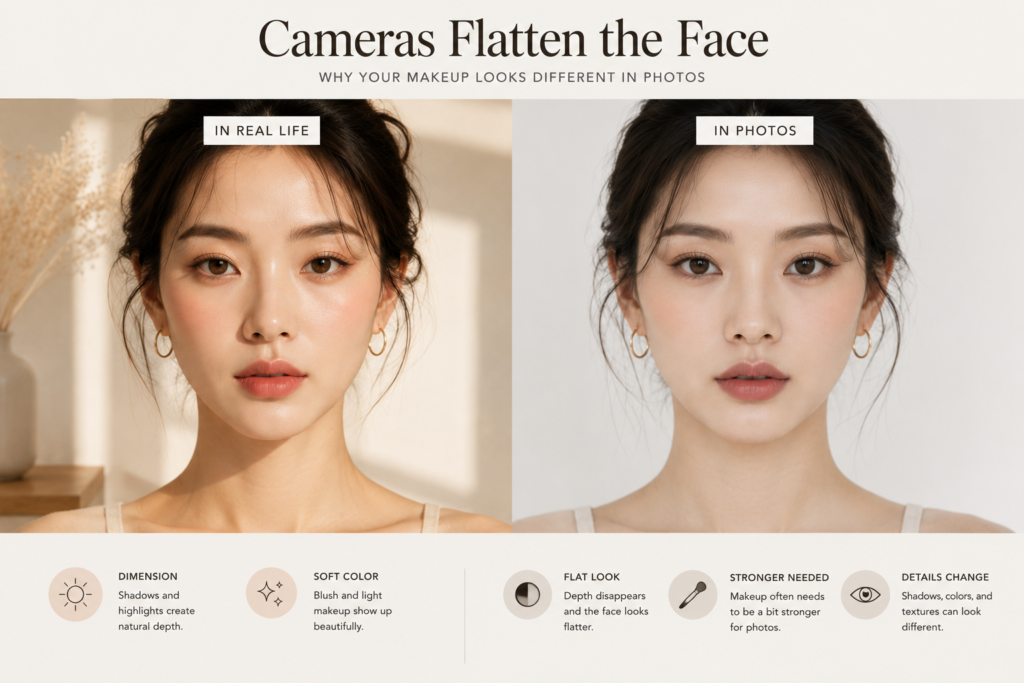
One reason makeup looks different in photos is because cameras remove depth.
In real life, people see movement, texture, shadows, and dimension naturally. But photographs flatten everything into a single image.
This changes how colors appear on the skin.
Blush that looked soft in person may suddenly disappear completely in photos. Meanwhile, contour or eyeliner can look much harsher because the camera compresses shadows differently.
That is why makeup for photography is often stronger than everyday makeup.
Lighting Changes Everything
Lighting is probably the biggest reason makeup looks inconsistent.
Warm indoor lighting can make the skin appear softer and more golden.
Natural daylight reveals undertones much more clearly.
Flash photography often removes warmth from the face entirely and exaggerates contrast instead.
This is why foundation that looked perfect at home sometimes turns orange, gray, or overly pale in pictures.
The makeup itself did not necessarily fail. The lighting simply revealed different parts of the undertone.
Undertones Become Much More Visible in Photos
Photography tends to emphasize hidden undertones people barely notice in real life.
For example:
- yellow foundation may appear too warm
- cool pink blush may suddenly dominate the face
- ash tones may look gray
- orange lipstick may appear neon
Cameras exaggerate imbalance very quickly.
That is why personal color becomes surprisingly important for photos. Makeup that harmonizes naturally with your undertones tends to photograph more softly and evenly.
Meanwhile, colors fighting against your complexion often become stronger and more obvious on camera.
The Wrong Foundation Is Easier to Notice in Pictures
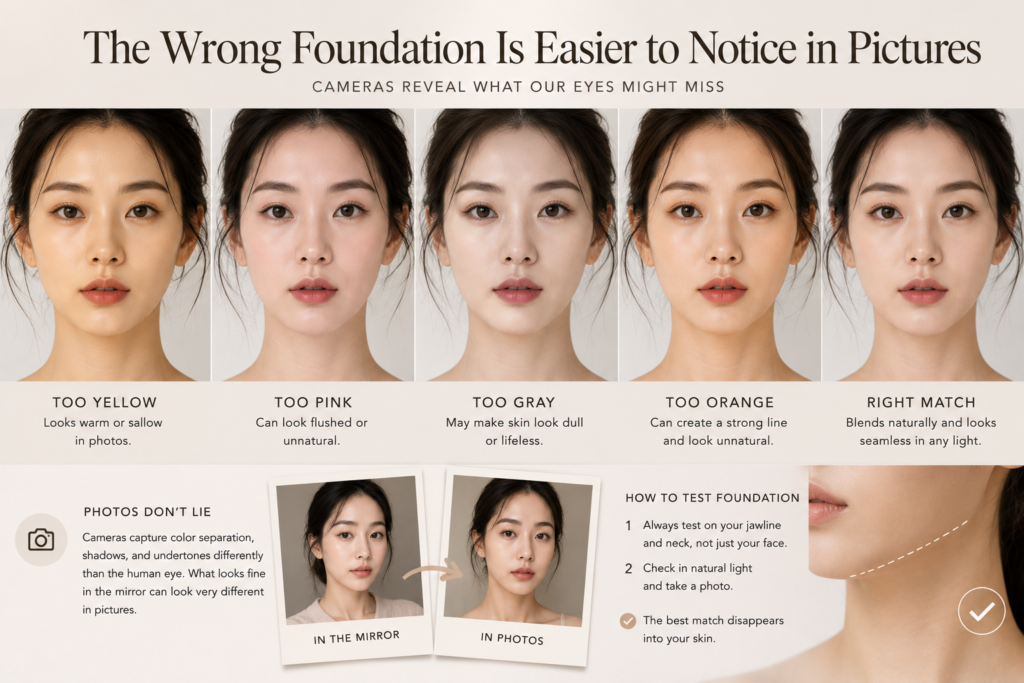
A foundation mismatch may look subtle in the mirror but obvious in photographs.
This happens because cameras capture color separation differently than the human eye.
A foundation that is:
- too yellow
- too pink
- too gray
- too orange
can suddenly create a visible mask effect in photos.
The neck and face separation often becomes more noticeable too.
This is one reason makeup artists test foundation under multiple lighting conditions before major events or photoshoots.
Flash Photography Changes Makeup Completely
Flash behaves differently from natural light.
It reflects strongly off certain textures and ingredients, which can dramatically alter how makeup appears.
Some products containing SPF or reflective minerals may create white cast in flash photography. Skin that looked natural in person can suddenly appear pale or shiny in pictures.
Heavy powder can also become more obvious under flash because cameras catch texture differently than real life.
This is why bridal makeup, red carpet makeup, and editorial makeup are often designed specifically for photography rather than daily wear.
Contrast Matters More on Camera
Faces with naturally stronger contrast usually photograph differently than softer faces.
People with dark hair, defined brows, or deep eye color often handle bold makeup well in photos because the camera already reads their features strongly.
Meanwhile, softer-featured people sometimes feel overwhelmed by dramatic makeup in pictures.
The same eyeliner or lipstick intensity does not behave equally on every face.
This is why copying celebrity makeup exactly rarely works the same way in real life. The face itself changes how makeup photographs.
Phone Cameras Also Distort Color
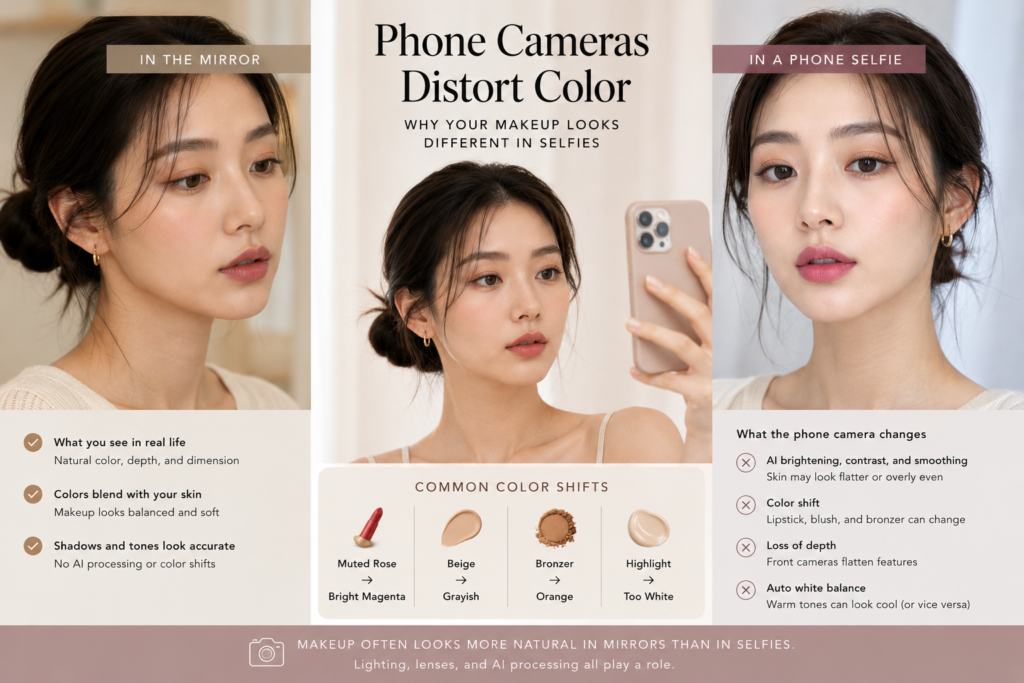
Modern phone cameras automatically process images using AI enhancement and color correction.
Sometimes phones increase contrast, smooth skin, brighten shadows, or adjust warmth without people realizing it.
This can completely shift makeup colors.
A muted rose lipstick may suddenly look bright magenta. Beige makeup can become gray. Bronzer can appear orange.
Front-facing cameras are especially notorious for changing proportions and flattening facial dimension.
That is why makeup often feels more natural in mirrors than in selfies.
Social Media Makeup Is Often Designed for Cameras
A lot of viral makeup trends are optimized for photography and video rather than everyday life.
Strong blush placement, exaggerated contour, bright under-eyes, and dramatic lip liner may look beautiful under studio lighting and editing.
But in natural daylight, those same techniques can sometimes feel heavy or unnatural.
This is one reason many people feel disappointed trying social media makeup trends at home.
The trend was designed for the camera first.
Why Some People Always Look Good in Photos
Interestingly, people who consistently photograph well often understand color harmony intuitively.
Their:
- foundation matches properly
- undertones feel balanced
- makeup contrast suits their features
- clothing colors support their complexion
Nothing fights against the face visually.
This creates an overall impression that feels calm and cohesive on camera.
Sometimes it is not about wearing more makeup at all. It is simply about wearing colors that naturally harmonize with the skin.
Photos Reveal Harmony Very Quickly
One reason personal color consultations sometimes use photography is because cameras reveal imbalance faster than mirrors do.
Colors that seemed acceptable in person may suddenly appear harsh or draining in photos.
At the same time, harmonious colors tend to make the face look clearer and healthier almost immediately.
Once people start noticing these patterns, they often become much more intentional about:
- foundation undertones
- jewelry colors
- hair color
- blush placement
- clothing near the face
Because surprisingly, cameras notice color harmony even before people consciously do.
Leave a Reply