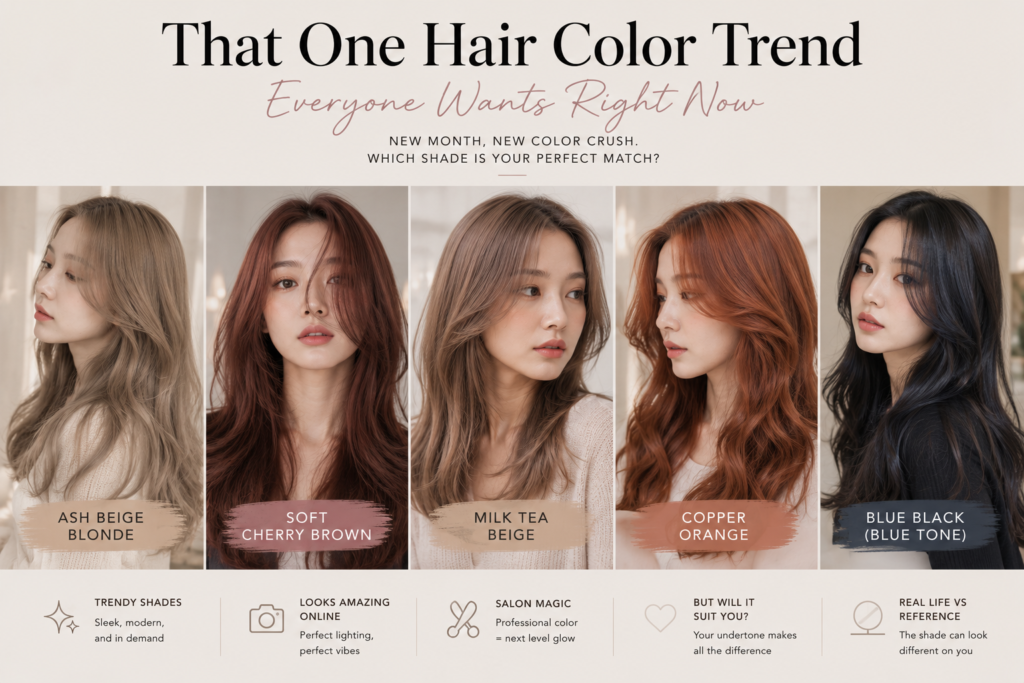
There is always that one hair color trend that suddenly takes over everywhere. One month it is ash beige blonde, then suddenly everyone wants soft cherry brown, milk tea beige, copper orange, or almost-black blue toned hair. The photos online look incredible, the salon lighting is perfect, and somehow every single person in the reference pictures looks effortlessly cool.
And then real life happens.
You sit in the salon chair feeling excited, imagining yourself looking completely transformed. Maybe even prettier somehow. Fresher. More stylish. But after the color settles in, something feels slightly strange. Not necessarily bad. Just… off. Your skin suddenly looks duller without makeup. Your under-eyes seem darker. Maybe your face feels flatter or more tired even though the hair itself is objectively beautiful.
This is honestly one of the easiest ways to notice how much personal color affects appearance.
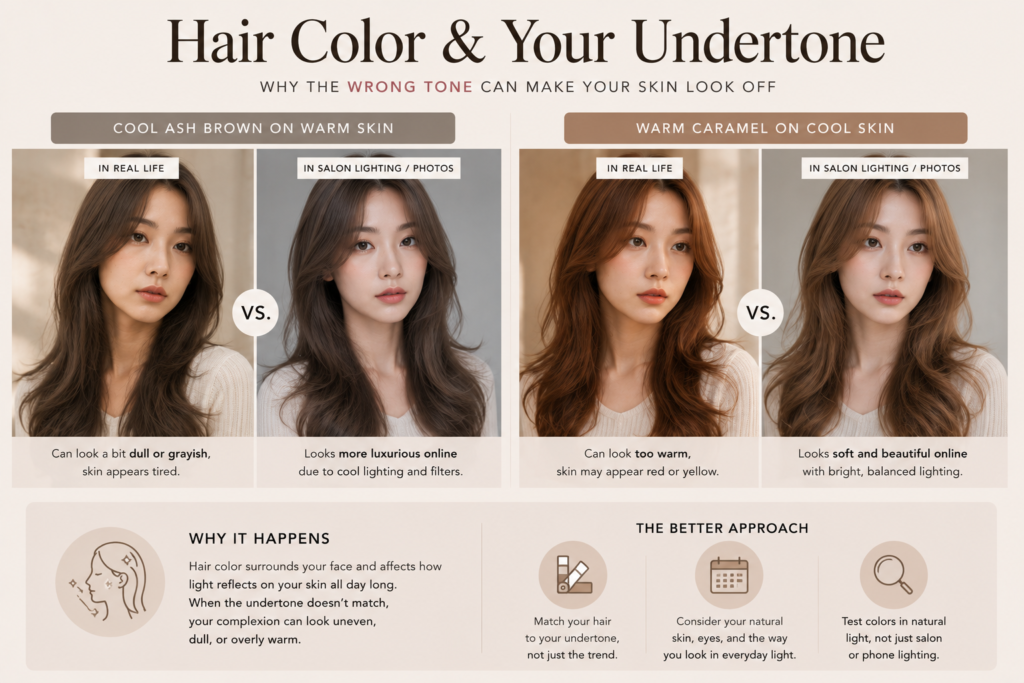
Hair sits directly beside the face all day long, so it changes the way skin reflects light constantly. That is why even expensive salon color can feel disappointing if the undertone fights your natural coloring. A cool ash brown that looks luxurious online may make warm-toned skin appear gray in real life. Meanwhile warm caramel highlights can make some cooler complexions look overly red or yellow.
The funny thing is that most people think they are choosing hair color based on preference, but usually there is already a pattern. Some people keep returning to warmer shades no matter what trends are popular. Others always end up back with darker cooler tones because those colors simply make their face feel more balanced.
This is also why two people can walk out of the same salon with the exact same hair color and somehow look completely different. On one person the color looks expensive and natural. On another person it suddenly becomes the first thing you notice before even seeing their face. Harmony matters more than the color itself.
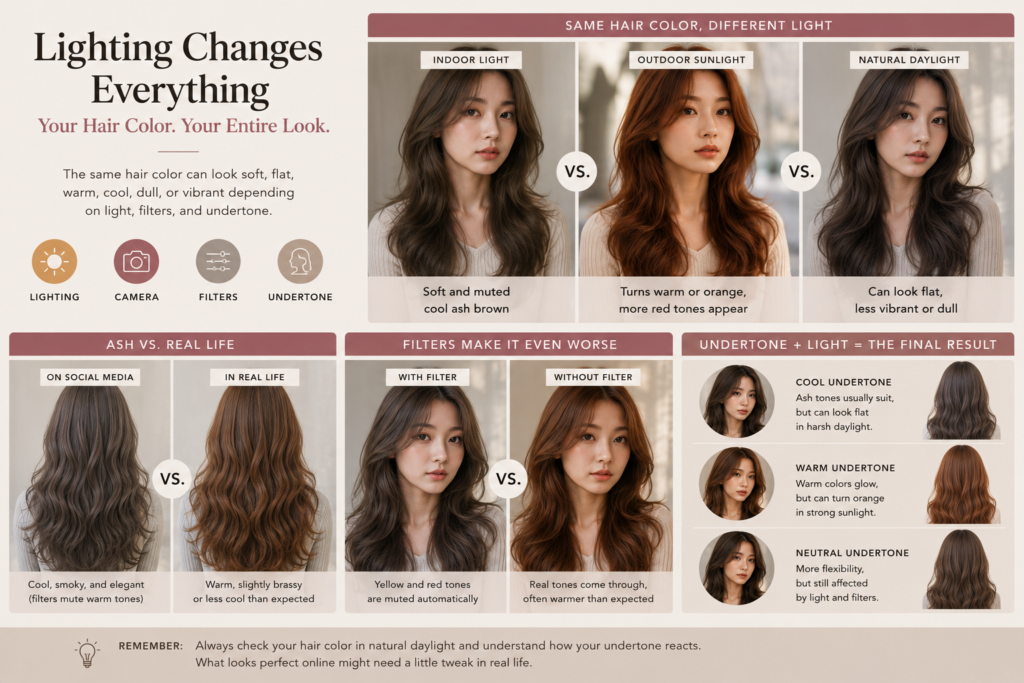
Lighting makes this even more confusing. Hair colors that look soft indoors sometimes become aggressively orange outside in sunlight. Ash tones that seemed elegant at first can suddenly look flat and lifeless in natural daylight. Social media filters make this worse because many photos slightly mute yellow or red tones automatically, creating those cool smoky hair colors that are actually difficult to maintain in real life.
A lot of people also underestimate how much eyebrows and makeup affect hair color balance. Some hair shades only work because the styling around them is supporting the look. That soft beige blonde online may actually depend on pale brows, muted makeup, cool lighting, and careful editing to feel harmonious.
And honestly, this is why some people look best in hair colors that are surprisingly close to their natural shade.
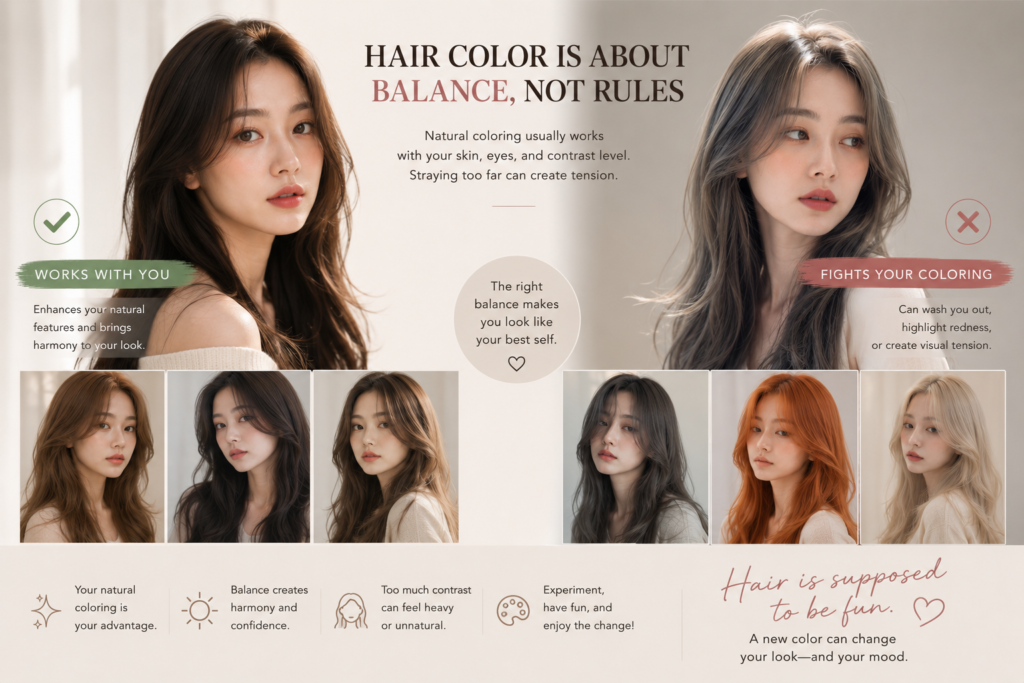
Natural coloring usually already works with the skin, eyes, and overall contrast level of the face. Going too far away from that balance can sometimes create visual tension, even if the trend itself is beautiful. That does not mean people should never experiment, of course. Hair is supposed to be fun. Sometimes changing your hair completely changes your mood too, which matters just as much as strict color theory.
But once people start noticing undertones, it becomes impossible not to see these patterns everywhere. Suddenly you notice why certain celebrities always stay within similar hair color families. You notice why one shade makes someone look bright and expensive while another makes them seem exhausted overnight.
And weirdly enough, most people already know their best hair color deep down. It is usually the shade they keep returning to after every trend fades away.
How to Apply Eyeliner Without Making Your Eyes Look Smaller
Leave a Reply