For many years, oils had a bad reputation in skincare.
People with oily skin avoided them. Acne-prone individuals feared them. Many assumed that putting oil on the skin would simply make the face greasier and lead to more breakouts.
Today, we know the story is much more complicated.
In fact, oils are among the most important ingredients used in modern skincare. From moisturizers and cleansing oils to serums and facial treatments, oils help support the skin barrier, reduce moisture loss, and improve skin comfort.
Understanding how cosmetic oils work is one of the first steps toward understanding how skincare products are formulated.
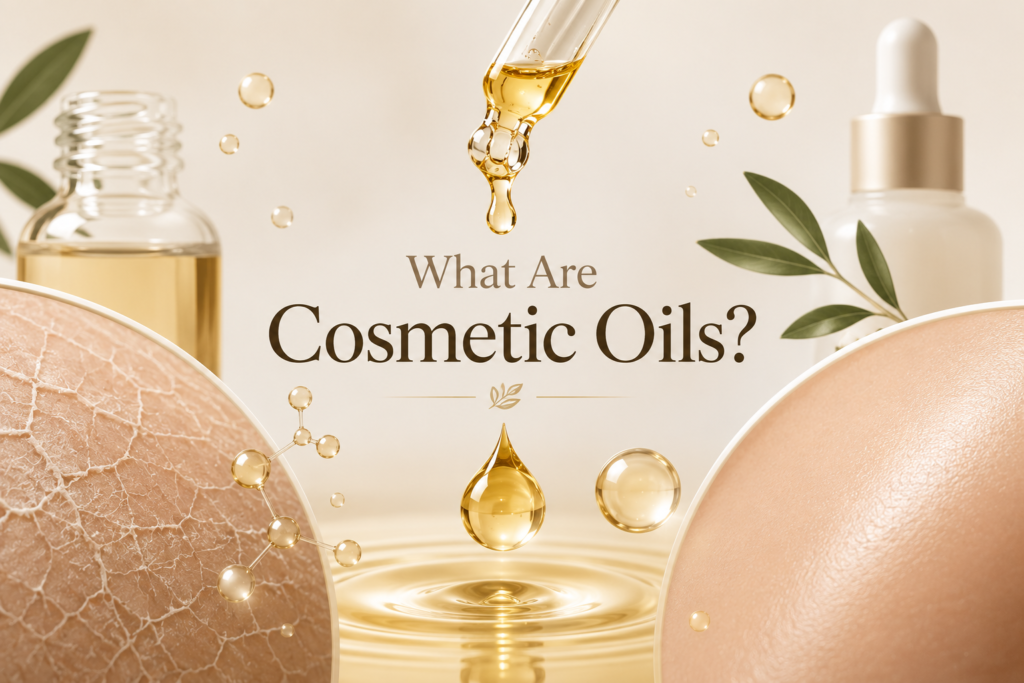
What Are Cosmetic Oils?
Cosmetic oils are oil-based ingredients used in skincare and beauty products to soften, protect, and condition the skin.
Unlike water-based ingredients that provide hydration directly, oils primarily help prevent moisture from escaping the skin.
This distinction is important.
Many people think oils moisturize the skin by adding water.
They don’t.
Instead, oils help lock existing moisture into the skin and strengthen the skin’s protective barrier.
This is why oils are often described as emollients or occlusive ingredients.
Why Are Oils Used in Cosmetics?
Healthy skin naturally contains lipids, which help maintain the skin barrier.
Environmental factors such as:
- Cold weather
- Sun exposure
- Harsh cleansers
- Aging
- Over-exfoliation
can reduce the skin’s natural protective oils.
Cosmetic oils help compensate for this loss.
They are commonly used to:
- Reduce moisture loss
- Improve skin softness
- Support the skin barrier
- Smooth rough texture
- Enhance product spreadability
- Dissolve makeup and sunscreen
Without oils, many skincare products would feel less comfortable and less effective.
How Oils Work on the Skin
The outermost layer of skin is known as the skin barrier.
Think of it as a protective wall that keeps moisture inside while blocking external irritants.
When this barrier becomes damaged, skin often feels:
- Dry
- Tight
- Rough
- Sensitive
- Irritated
Oils help reinforce this barrier by creating a protective layer on the skin’s surface.
This reduces transepidermal water loss (TEWL), which is the natural evaporation of water from the skin.
Less water loss generally means healthier, more comfortable skin.
Different Types of Cosmetic Oils
Not all oils are the same.
Some are lightweight and absorb quickly.
Others are rich and highly protective.
The main categories include:
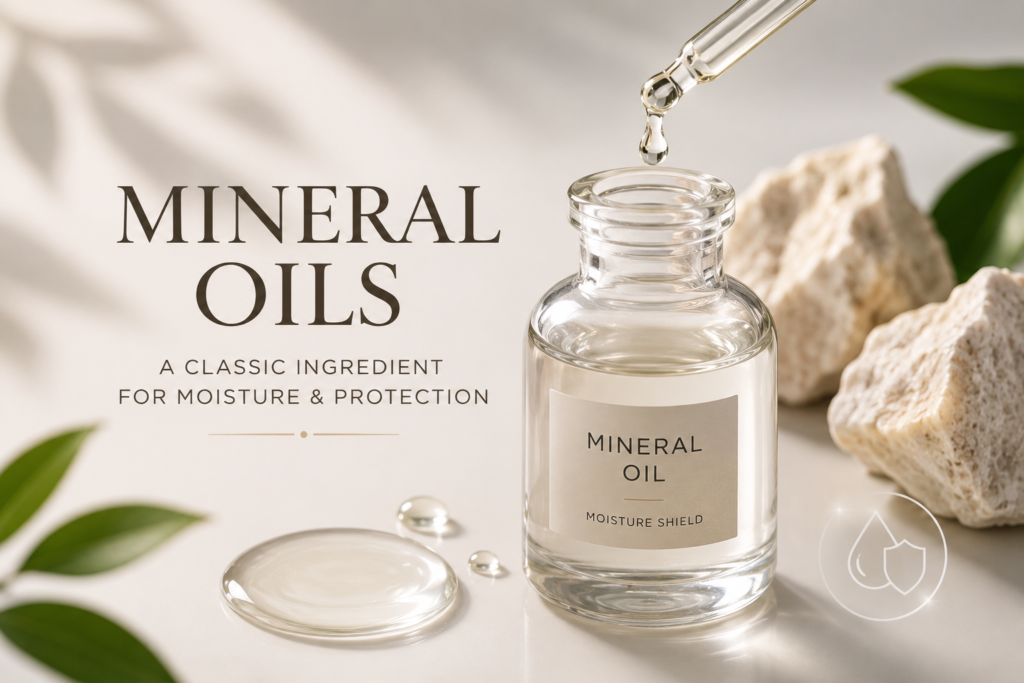
Mineral Oils
Mineral oil is derived from petroleum and has been used safely in cosmetics for decades.
Despite its negative reputation online, cosmetic-grade mineral oil is highly purified and considered safe by regulatory agencies.
Advantages:
- Excellent moisture retention
- Stable formulation
- Low allergy risk
Disadvantages:
- May feel heavy on some skin types
- Less popular among consumers seeking natural ingredients
Plant Oils
Plant oils are extracted from seeds, nuts, fruits, and other botanical sources.
Popular examples include:
- Jojoba Oil
- Argan Oil
- Rosehip Oil
- Sunflower Oil
- Olive Oil
- Coconut Oil
Each plant oil contains a different combination of fatty acids and antioxidants.
Because of this, their effects can vary significantly.
Synthetic Oils
Modern skincare also uses laboratory-created oils.
These ingredients are designed to provide specific textures and performance characteristics.
Examples include:
- Isopropyl Myristate
- Hydrogenated Polyisobutene
Advantages:
- Consistent quality
- Lightweight texture
- Excellent stability
Oils in Cleansing Products
One of the most interesting uses of oil is in cleansing products.
At first, it sounds counterintuitive.
Why would you use oil to remove oil?
The answer lies in basic chemistry.
Oil dissolves oil.
Sebum, sunscreen, and many makeup products are oil-based.
Cleansing oils help dissolve these substances more effectively than water alone.
When combined with emulsifiers, cleansing oils can be rinsed away with water while carrying makeup and impurities with them.
This is why oil cleansing has become so popular.
Are Oils Suitable for Oily Skin?
One of the biggest skincare myths is that oily skin should avoid oils entirely.
In reality, many people with oily skin benefit from certain oils.
Some lightweight oils help maintain barrier function without feeling greasy.
Examples include:
- Jojoba Oil
- Squalane
- Sunflower Oil
The key is choosing the right oil rather than avoiding all oils.
Potential Drawbacks of Cosmetic Oils
Although oils offer many benefits, they are not perfect for everyone.
Possible disadvantages include:
- Heavy texture
- Increased shine
- Potential breakouts from certain oils
- Sensitivity to specific botanical ingredients
For example, coconut oil works well for some people but may feel too heavy for others.
This is why skincare is highly individual.
Oils vs Hydrating Ingredients
People often confuse oils with hydrating ingredients.
They perform different functions.
Hydrating ingredients such as:
- Glycerin
- Hyaluronic Acid
- Panthenol
attract and hold water.
Oils help prevent that water from escaping.
This is why many moisturizers contain both water-attracting ingredients and oils.
Together they create a more complete moisturizing system.
How to Choose the Right Oil
Dry skin often benefits from richer oils.
Examples:
- Argan Oil
- Avocado Oil
- Olive Oil
Oily skin often prefers lighter oils.
Examples:
- Squalane
- Jojoba Oil
- Sunflower Oil
Sensitive skin may benefit from simpler formulations with fewer botanical extracts.
The best oil is ultimately the one that supports your skin without causing irritation or discomfort.
Final Thoughts
Cosmetic oils are far more than just ingredients that make products feel rich or luxurious.
They play a critical role in protecting the skin barrier, reducing moisture loss, and improving overall skin comfort.
Whether found in moisturizers, cleansing oils, serums, or facial treatments, oils help support healthier-looking skin when used appropriately.
Understanding how oils work makes it much easier to choose products that match your skin’s needs—and helps explain why oils remain one of the most valuable ingredients in modern skincare.
Leave a Reply