If you’ve ever used a lip balm that seemed to heal dry lips almost overnight, there’s a good chance lanolin was one of the key ingredients.
Despite being used in skincare for decades, lanolin remains one of the most misunderstood cosmetic ingredients. Some people consider it one of the most effective moisturizers available, while others avoid it because they are unsure where it comes from.
The truth is that lanolin has a long history in both skincare and medical applications, and it continues to be widely used in products designed to protect and repair dry skin.
Understanding what lanolin is and how it works can help you decide whether it’s a suitable ingredient for your skincare routine.
What Is Lanolin?
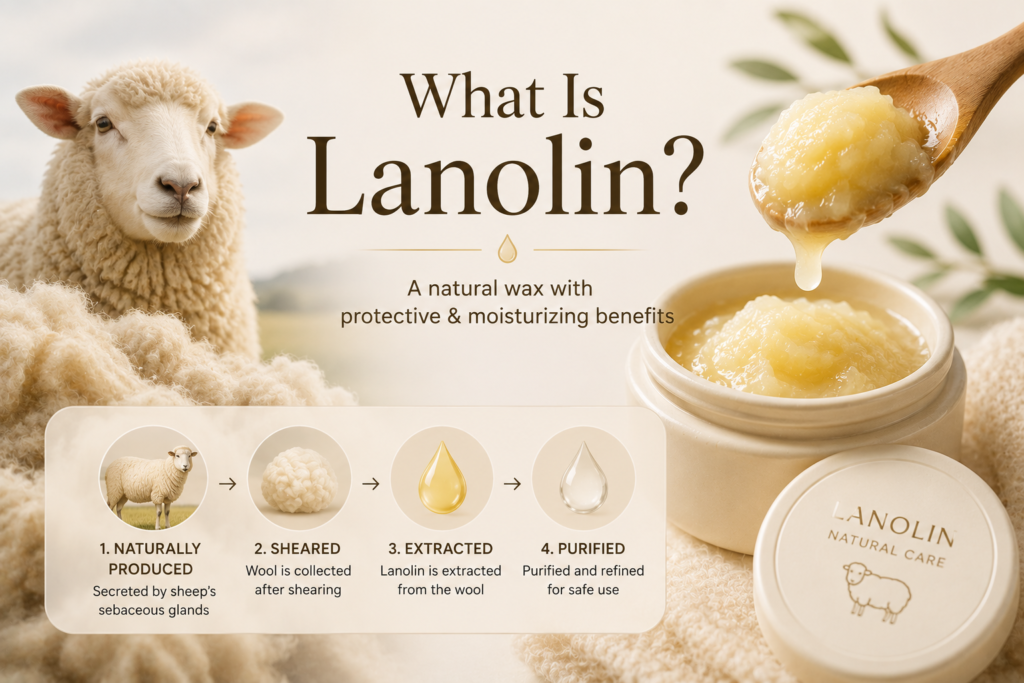
Lanolin is a waxy substance naturally produced by sheep.
It is secreted by the sebaceous glands in sheep’s skin and coats their wool, helping protect them from harsh weather conditions such as rain, wind, and cold temperatures.
After the wool is sheared, lanolin is extracted, purified, and refined for cosmetic and pharmaceutical use.
Although it is often called “wool oil,” lanolin is technically a wax rather than a true oil.
Its unique structure allows it to provide both protective and moisturizing benefits.
Why Is Lanolin Used in Cosmetics?
Lanolin is highly valued because it closely resembles some of the natural lipids found in human skin.
This allows it to help:
- Reduce moisture loss
- Soften rough skin
- Support the skin barrier
- Protect damaged skin
- Improve skin comfort
Because of these properties, lanolin is frequently found in:
- Lip balms
- Hand creams
- Body lotions
- Healing ointments
- Nipple creams
- Cuticle treatments
- Dry skin repair products
Its ability to lock in moisture makes it especially useful for extremely dry areas.
How Does Lanolin Work?
Healthy skin naturally contains oils and lipids that help prevent water from escaping.
When the skin barrier becomes damaged, moisture can evaporate more quickly, leading to:
- Dryness
- Tightness
- Flaking
- Cracking
- Irritation
Lanolin works by forming a protective layer on the skin’s surface.
This layer helps reduce transepidermal water loss (TEWL), allowing the skin to retain moisture for longer periods.
Unlike some ingredients that simply sit on the surface, lanolin can also soften and condition the outer layers of the skin.
This combination of protection and softness is one reason it remains popular in skincare formulations.
Why Is Lanolin So Popular in Lip Care?
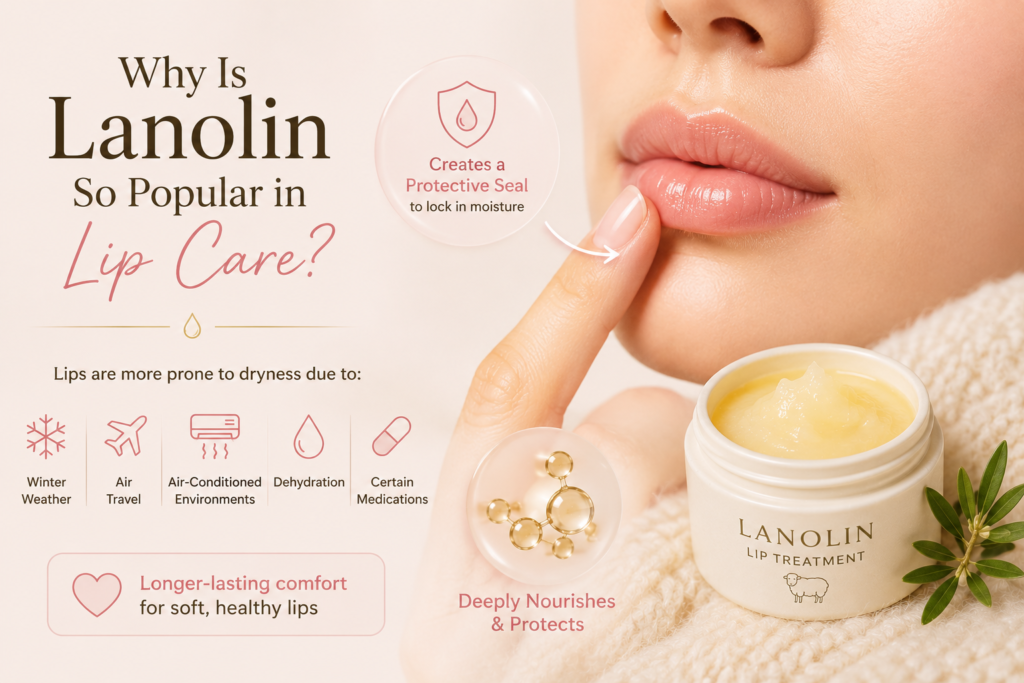
Lips have a weaker natural barrier than many other parts of the body.
They contain fewer oil glands and lose moisture more easily.
This is why lips often become dry, especially during:
- Winter weather
- Air travel
- Air-conditioned environments
- Dehydration
- Certain medications
Lanolin helps create a protective seal that prevents moisture from escaping.
Many users find that lanolin-based lip products provide longer-lasting comfort than lighter formulations.
This is one reason lanolin appears in many premium lip treatments.
Lanolin in Medical and Therapeutic Products
Lanolin is not only used in beauty products.
It is also commonly found in medical and therapeutic skincare.
One well-known example is nipple cream used by breastfeeding mothers.
Because purified lanolin is highly effective at protecting damaged skin, it is often recommended to soothe and repair sensitive areas.
It may also be found in products designed for:
- Cracked heels
- Severely dry hands
- Eczema-prone skin
- Protective skin barriers
Its long history of use has contributed to its reputation as a reliable skin-conditioning ingredient.
Different Types of Lanolin
Not all lanolin is identical.
Modern cosmetic products may use different forms, including:
Anhydrous Lanolin
This is pure lanolin with water removed.
It is highly protective and commonly used in intensive moisturizers.
Lanolin Alcohol
A processed derivative often used as an emulsifier and stabilizer in creams and lotions.
Hydrolyzed Lanolin
A modified version that can provide a lighter feel and improved compatibility with certain formulations.
Each type serves a slightly different purpose in cosmetic products.
Advantages of Lanolin
Lanolin offers several benefits that explain its continued popularity.
Excellent Moisture Retention
Lanolin is highly effective at preventing water loss from the skin.
Strong Barrier Protection
It helps protect dry or damaged skin from environmental stress.
Softening Effect
Lanolin can make rough skin feel smoother and more comfortable.
Versatile Use
It works well in lip products, body care, and intensive repair treatments.
Potential Disadvantages of Lanolin
Although lanolin is effective, it is not ideal for everyone.
Heavy Texture
Some people find lanolin-rich products too thick or greasy.
Animal-Derived Ingredient
Because lanolin comes from sheep’s wool, it may not be suitable for those seeking vegan skincare products.
Possible Sensitivity
A small number of people may experience irritation or allergic reactions to lanolin.
While this is relatively uncommon, patch testing is always recommended when trying a new product.
Lanolin vs Petroleum Jelly
Lanolin and petroleum jelly are often compared because both help protect the skin.
However, they function slightly differently.
Lanolin:
- Softens skin
- Supports moisture retention
- Mimics natural skin lipids
Petroleum Jelly:
- Creates a highly effective protective barrier
- Primarily prevents water loss
- Does not provide the same conditioning properties as lanolin
Many products actually combine both ingredients to maximize benefits.
Who Should Consider Lanolin?
Lanolin may be particularly beneficial for people with:
- Very dry skin
- Chapped lips
- Cracked hands
- Dry cuticles
- Damaged skin barriers
People with oily skin may find lanolin too rich for use on the entire face, although it can still work well on localized dry areas.
Final Thoughts
Lanolin is one of the most effective moisturizing ingredients used in modern skincare.
Derived from sheep’s wool, it helps protect the skin, reduce moisture loss, and improve softness. Its ability to support damaged or extremely dry skin explains why it remains a popular ingredient in lip balms, healing ointments, and intensive moisturizers.
While its rich texture may not suit everyone, lanolin continues to be a trusted ingredient for those seeking long-lasting hydration and barrier protection.
Understanding lanolin is another important step toward understanding how cosmetic ingredients work—and why some products feel dramatically more moisturizing than others.
Leave a Reply