Pink eyeshadow has always had an interesting reputation.
Some people absolutely love it. They see soft pink eyelids and think of fresh spring makeup, healthy skin, and that effortless beauty look that seems to dominate social media every year.
Other people try pink eyeshadow exactly once and immediately decide never to touch it again.
The usual complaint?
“It makes me look like I’ve been crying.”
It’s a surprisingly common reaction, and honestly, they’re not completely wrong.
Pink eyeshadow can be one of the most flattering colors in makeup. It can also be one of the easiest ways to accidentally make your eyes look swollen, irritated, or tired.
The difference usually comes down to choosing the right pink.
Most people think pink is just pink.
In reality, pink exists on a huge spectrum.
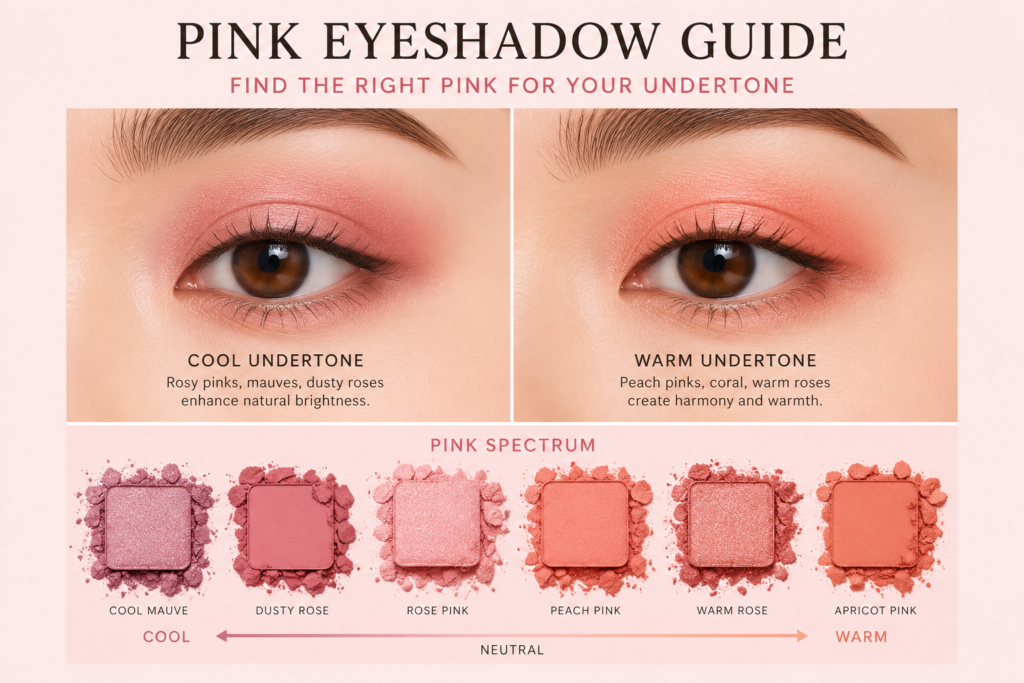
Some pinks lean warm and peachy.
Others lean cool and rosy.
Some contain hints of brown, beige, or mauve.
Others are bright, saturated, and almost neon.
These small differences completely change the final result.
The pink eyeshadows that tend to cause problems are usually the ones that closely resemble the natural redness found around the eyes.
When makeup mimics irritation, the brain interprets it as irritation.
That’s why certain bright pinks can create the illusion of tiredness even when your skin looks perfectly healthy.
Instead of making the eyes appear brighter, they make them look slightly inflamed.
This is especially noticeable if the color is applied all around the eye without any balancing shades.
Many beginners make this mistake.
They see a beautiful pink eyeshadow online and apply it across the entire lid, lower lash line included.
The result often looks much stronger than expected.
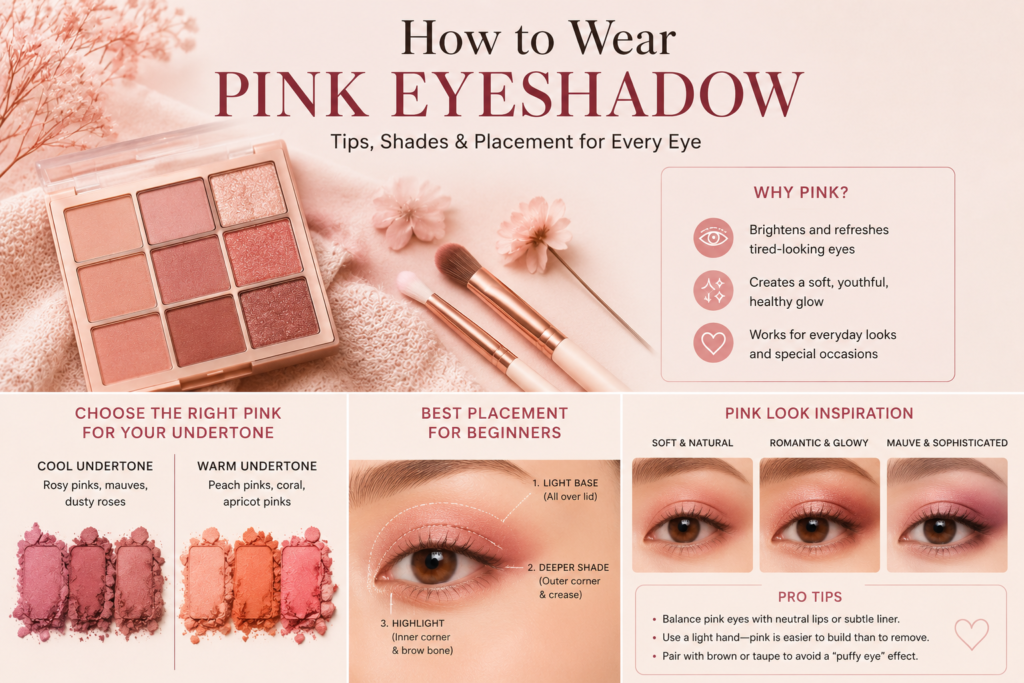
A better approach is to think of pink as an accent rather than the entire story.
Professional makeup artists rarely rely on a single pink shade alone.
Instead, they combine pink with neutral colors like:
- taupe
- soft brown
- beige
- muted rose
- dusty mauve
These supporting shades create structure around the eyes and prevent the pink from becoming overwhelming.
The overall effect feels intentional rather than accidental.
One reason pink eyeshadow became so popular in Korean beauty is that it creates a youthful appearance when used correctly.
Soft pink shades mimic the natural warmth that appears in healthy skin.
They can make the eyes appear softer and more approachable compared to dramatic smoky makeup.
This is why many Korean eyeshadow palettes contain subtle pinks rather than intense browns.
The goal is freshness rather than intensity.
Interestingly, personal color plays a huge role here.
Cool-toned individuals often look incredible in pink eyeshadow.
Rosy pinks, mauves, and dusty rose shades tend to blend naturally into their complexion. Instead of looking like obvious color, they simply create brightness around the eyes.
For them, pink often feels elegant and effortless.
Warm-toned individuals can absolutely wear pink too, but the best shades are usually different.
Instead of icy pinks, they often look better in:
- coral pink
- peach pink
- warm rose
- apricot pink
These shades contain enough warmth to harmonize with the skin.
When the undertone matches, pink becomes much easier to wear.
Age also affects how pink eyeshadow behaves.
Bright reflective pinks can sometimes emphasize texture on mature eyelids. Softer matte or satin finishes tend to create a smoother appearance.
This is one reason many makeup artists gradually move toward muted pink tones rather than highly saturated shades as skin matures.
Another mistake people make is pairing pink eyeshadow with pink everything else.
Pink blush.
Pink lipstick.
Pink eyeshadow.
Pink highlighter.
At that point the face can start looking flat because there isn’t enough contrast.
The most flattering makeup usually contains some balance.
A soft pink eye often looks better with neutral lips or subtle definition around the lashes.
That contrast helps the eyes remain the focus.
Perhaps the biggest misconception about pink eyeshadow is that it’s either universally flattering or universally terrible.
Neither is true.
Pink is simply one of those colors that requires a little more attention to undertones and placement.
When the wrong pink is used, the eyes can look tired.
When the right pink is used, the eyes can look brighter, softer, and more youthful than almost any neutral shade.
That’s why pink eyeshadow never really disappears from beauty trends.
People keep coming back to it because when it works, it creates a look that feels fresh, romantic, and surprisingly effortless.
The challenge is finding the version of pink that works for you.
Leave a Reply