Many people think eyelash extensions are simply about attaching longer lashes to natural lashes. In reality, a professional eyelash extension treatment involves a combination of specialized materials, precise application techniques, and proper aftercare.
The quality of the materials used can significantly affect not only the final appearance but also comfort, retention, and the overall health of the natural lashes. Understanding what goes into a lash extension service can help clients make more informed decisions and achieve better long-term results.
The Main Materials Used in Eyelash Extensions
A professional lash extension procedure typically involves several key materials working together.
Eyelash Extensions
The extensions themselves are the most visible part of the service.
Despite common marketing terms such as “silk lashes” or “mink lashes,” most modern professional extensions are made from a synthetic material called PBT (Polybutylene Terephthalate).
PBT is preferred because it offers:
- Consistent curl retention
- Lightweight structure
- Resistance to moisture and heat
- High durability
- Uniform appearance
Modern lash manufacturers produce extensions in various lengths, diameters, curls, and finishes to suit different eye shapes and styling goals.
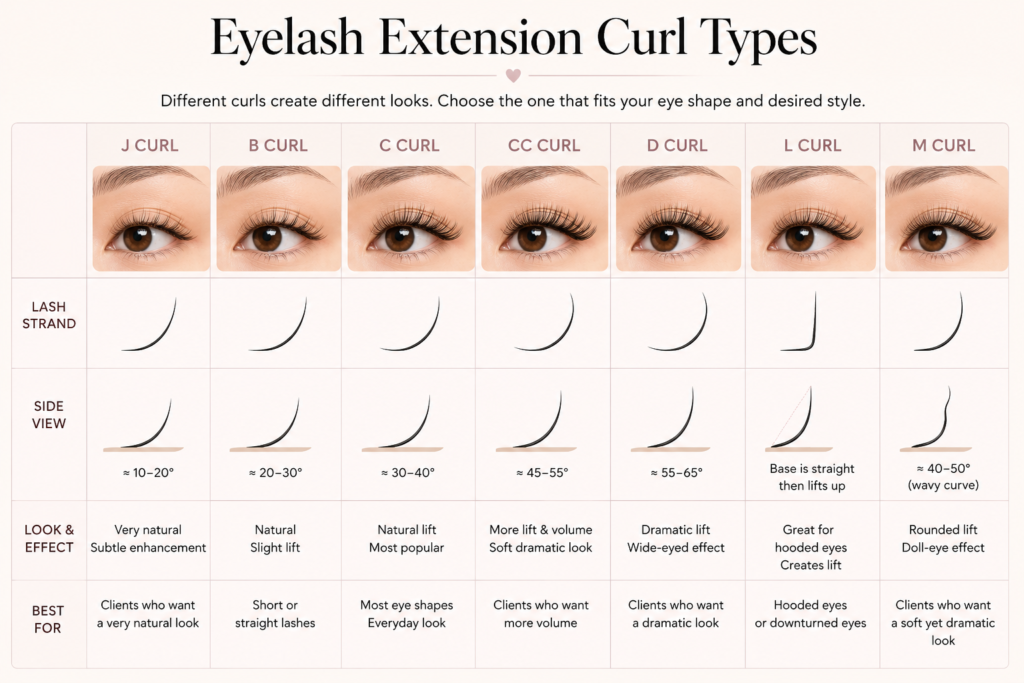
Popular curl types include:
- J Curl
- B Curl
- C Curl
- CC Curl
- D Curl
- L Curl
- M Curl
Each curl creates a different visual effect, from natural enhancement to dramatic lift.
Lash Adhesive
The adhesive is one of the most important components of the treatment.
Professional lash adhesives are primarily based on cyanoacrylate technology, which allows rapid bonding between the extension and the natural lash.
A quality adhesive is designed to provide:
- Strong retention
- Flexibility
- Low irritation potential
- Resistance to humidity and oils
Different adhesives are formulated for different working environments.
Factors such as:
- Room temperature
- Humidity
- Technician speed
all influence adhesive performance.
This is why experienced lash artists carefully monitor their salon environment.
Under-Eye Patches
Hydrogel or lint-free under-eye patches are applied beneath the lower lashes during treatment.
Their purpose is to:
- Separate upper and lower lashes
- Protect delicate under-eye skin
- Improve client comfort
- Allow easier isolation
Professional-grade patches should stay securely in place without causing irritation.
Tweezers
Professional lash technicians typically work with two specialized tweezers.
Isolation Tweezers
Used to separate a single natural lash from neighboring lashes.
Volume Tweezers
Used to pick up and place extensions or volume fans.
The quality of tweezers directly affects application precision and speed.
Many experienced technicians spend years finding their preferred tweezer styles.
Lash Primer and Cleanser
Before application, natural lashes must be properly cleansed.
Professional cleansers help remove:
- Makeup residue
- Natural oils
- Dust particles
- Skincare products
Some technicians also use lash primers to optimize adhesive bonding.
Proper preparation is essential because even small amounts of oil can reduce retention.
Why Isolation Matters
One of the most important technical principles in lash extensions is isolation.
Every extension should be attached to a single natural lash.
When multiple natural lashes become bonded together, several problems may occur:
- Premature shedding
- Discomfort
- Twisting extensions
- Damage to natural lashes
- Poor lash growth
Proper isolation ensures that each natural lash can continue its growth cycle independently.
This is one of the key differences between high-quality professional work and poorly applied extensions.
The First 24 Hours After Application
The first day after a lash appointment is particularly important.
Although modern adhesives cure much faster than older formulas, technicians often recommend minimizing unnecessary exposure to:
- Steam
- Excessive heat
- Sauna sessions
- Long hot showers
During this period, the adhesive continues reaching its maximum bond strength.
Following aftercare instructions helps maximize retention from the beginning.
Daily Eyelash Extension Aftercare
Many clients mistakenly believe that extensions should not be washed.
In reality, proper cleansing is one of the most important parts of lash maintenance.
Dirty lashes accumulate:
- Makeup residue
- Skin oils
- Dust
- Dead skin cells
- Environmental pollutants
Without regular cleansing, buildup can affect both retention and eye health.
Professional lash cleansers are specifically designed to clean extensions without weakening the adhesive bond.
Most technicians recommend cleaning extensions daily or at least several times per week depending on lifestyle.
Avoid Excessive Oil Around the Eyes
Oil is one of the biggest enemies of lash retention.
Many skincare products contain oils that can gradually weaken the adhesive bond.
Common products to monitor include:
- Oil-based makeup removers
- Cleansing balms
- Heavy eye creams
- Facial oils
This does not mean clients must completely avoid skincare.
It simply means using products carefully around the eye area.
Sleeping Habits and Lash Retention
Sleeping position has a larger impact on retention than many people realize.
People who sleep face-down often experience:
- Twisted lashes
- Premature fallout
- Loss of curl direction
Using a silk or satin pillowcase may help reduce friction during sleep.
Some dedicated lash clients also use specially designed beauty pillows that reduce pressure on the lashes.
Why Regular Refills Are Necessary
Unlike artificial nails or permanent makeup, lash extensions are attached to growing natural hairs.
Natural eyelashes continuously cycle through:
- Growth phase
- Transition phase
- Shedding phase
As natural lashes shed, the attached extensions shed with them.
This is completely normal.
Most clients schedule refill appointments every:
- 2 weeks
- 3 weeks
- occasionally 4 weeks
depending on personal preference and lash growth rate.
Common Mistakes That Reduce Retention
Even beautifully applied extensions can experience poor retention if aftercare is neglected.
Some of the most common mistakes include:
- Rubbing the eyes
- Sleeping face-down
- Using oil-based removers
- Picking at extensions
- Skipping lash cleansing
- Excessive heat exposure
These habits can significantly shorten the lifespan of a lash set.
Final Thoughts
Beautiful eyelash extensions depend on much more than simply attaching synthetic fibers to natural lashes.
The quality of the extensions, adhesive performance, proper isolation techniques, environmental conditions, and client aftercare all work together to determine the final result.
When high-quality materials are combined with professional application and consistent maintenance, eyelash extensions can remain comfortable, healthy, and attractive throughout the natural lash cycle.
Understanding the science and technique behind lash extensions helps clients appreciate why professional lash services require both artistry and precision.
What Is a Lash Lift? Benefits, Process, and How Long It Lasts
What Are Eyelash Extensions? Everything You Need to Know Before Your First Appointment
Leave a Reply