What Is Personal Color (And Why Everyone Is Talking About It)
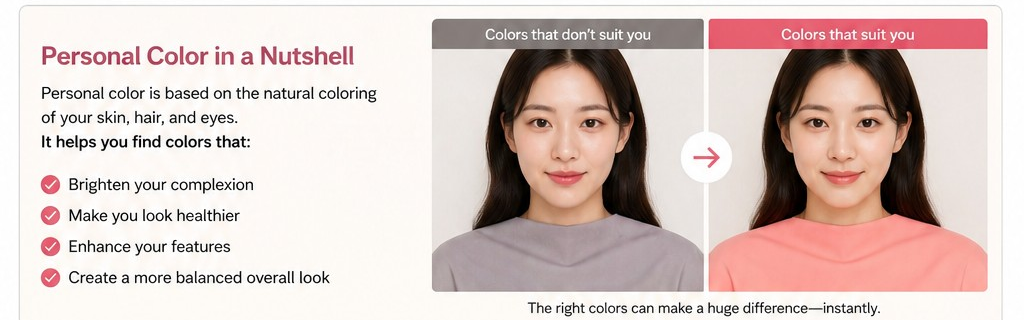
Have you ever tried a color that looked amazing on someone else—but somehow made you look tired, dull, or just… off?
It’s one of those small but frustrating experiences that most people have had at least once. You buy something because it looks good, only to realize later that it doesn’t quite work on you.
And usually, the first thought is simple:
“Maybe it’s just me.”
But in reality, there’s a reason behind it.
👉 That’s where personal color comes in.
What Personal Color Actually Means
Personal color is the idea that certain colors naturally suit you better than others based on your individual features.
Not just your skin tone, but also:
- your undertone
- your hair color
- your eye color
- your overall contrast
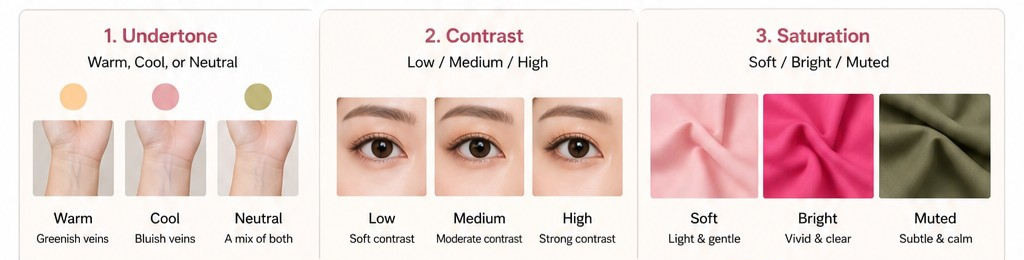
These elements combine to create a unique “color harmony” for each person.
And when a color matches that harmony, something interesting happens.
Your skin looks clearer.
Your features stand out more naturally.
You look more balanced—without doing anything extra.
Why Some Colors Work (And Others Don’t)
At first glance, color seems simple.
But when it comes to how it interacts with your face, it becomes much more complex.
Every color has three key characteristics:
- Undertone (warm, cool, neutral)
- Brightness (soft vs bright)
- Depth (light vs deep)
When the color you wear matches these aspects of your natural features, it blends seamlessly.
But when it doesn’t?
It creates contrast in the wrong way.
That’s when you might notice:
- your skin looking dull
- dark circles appearing more obvious
- your face looking more tired than usual
Not because anything is wrong—but because the color is working against you.
The Four Main Personal Color Types
Most personal color systems group people into four main categories, often called “seasons.”
These are:
- Spring (Warm & Bright)
- Summer (Cool & Soft)
- Autumn (Warm & Deep)
- Winter (Cool & Bright)
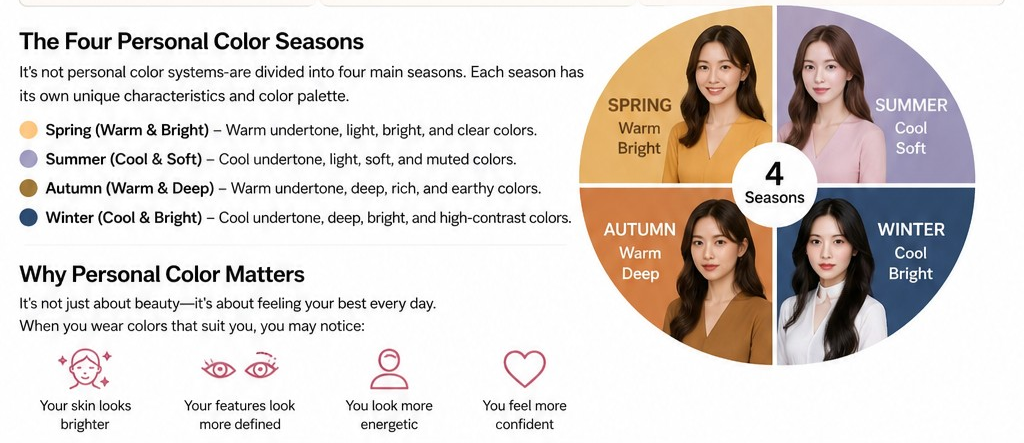
Each type has its own color palette that naturally complements the person’s features.
For example:
Spring types tend to look better in light, warm, and fresh colors.
Winter types often suit high-contrast, bold, and cool tones.
It’s not about limitation.
It’s about understanding what enhances you the most.
Why Personal Color Became So Popular
Personal color analysis started gaining attention in Korea, especially within the beauty industry.
But recently, it has spread globally—and fast.
Why?
Because it answers a very simple but powerful question:
👉 “Why do some things look good on me and others don’t?”
And more importantly, it gives a clear, practical answer.
Instead of guessing, people can:
- choose better makeup
- pick more flattering clothes
- avoid wasting money on things that don’t suit them
That combination—clarity + usefulness—is what made it explode in popularity.
It’s Not Just About Beauty
At first, personal color sounds like a beauty trend.
But in practice, it affects more than that.
When you wear colors that suit you:
- your skin looks healthier
- your features appear more defined
- your overall appearance feels more “put together”
And interestingly, people often say the same thing:
👉 “I look more like myself.”
That’s because the right colors don’t overpower you.
They support you.
Common Misunderstanding
One of the biggest misconceptions is thinking:
“I can only wear certain colors now.”
That’s not the point.
Personal color isn’t about restriction.
It’s about awareness.
You can still wear anything you want.
But once you understand what works best for you, you make better choices naturally.
Why This Matters More Than You Think
Most people spend years trying different products, styles, and trends.
Sometimes they work.
Sometimes they don’t.
But without understanding personal color, it’s mostly trial and error.
And that takes time—and money.
Personal color simplifies that process.
It doesn’t solve everything.
But it gives you a clear starting point.
Final Thoughts
Personal color isn’t just a trend.
It’s a way of understanding how color interacts with your natural features.
And once you see it, you can’t really unsee it.
You start noticing it everywhere:
In makeup.
In clothes.
In everyday choices.
Not in a complicated way.
But in a way that makes things feel more intentional.
And over time, that makes a difference.
Leave a Reply