Buying an eyeshadow palette should be easy.
Yet somehow most of us have at least one palette sitting in a drawer that looked beautiful in the store, looked beautiful online, and looked beautiful on everyone else—but never quite looked right on us.
The colors weren’t ugly. The quality wasn’t bad. But every time we used it, something felt slightly off.
Maybe the eyes looked tired. Maybe the makeup felt heavy. Maybe the colors seemed disconnected from the rest of the face.
This is where personal color becomes surprisingly important.
Many people think eyeshadow is simply about choosing colors they like. In reality, eyeshadow sits directly beside the eyes and can dramatically affect how bright, fresh, awake, or tired a face appears. The right shades can make the eyes sparkle and the skin look healthier. The wrong shades can emphasize dark circles, redness, or puffiness.
That’s why some people swear by warm brown eyeshadows while others feel they look much better in cooler taupe tones.
The difference usually comes down to undertones.
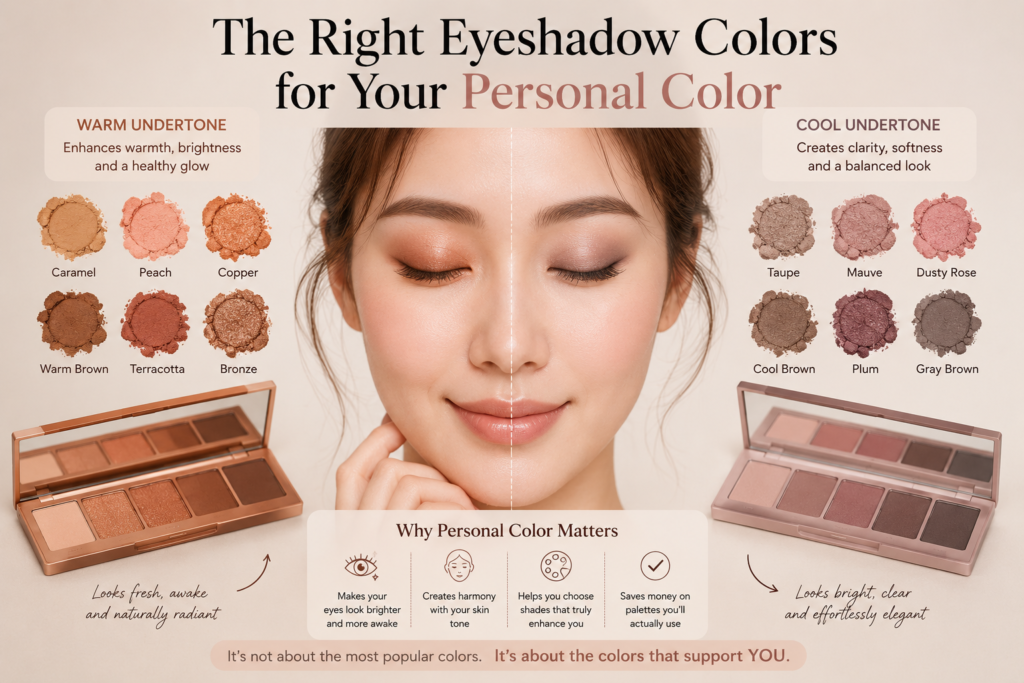
If you have warm undertones, eyeshadows with a hint of warmth often blend naturally into your features. Shades like caramel, peach, warm brown, copper, terracotta, and soft bronze tend to create harmony. These colors reflect warmth back into the skin and often make the eyes look brighter without appearing harsh.
This is one reason warm-toned makeup remains so popular. It can create a healthy, sun-kissed appearance that feels effortless and natural.
Cool-toned individuals often have the opposite experience.
A palette filled with warm orange browns may look beautiful in the pan, but once applied, the colors can feel too heavy or overly yellow. Cooler shades usually create better balance.
Colors like taupe, soft gray-brown, dusty rose, mauve, plum, and cool cocoa often enhance the eyes without overwhelming them. Instead of adding warmth, they create clarity and softness.
This is why one person’s perfect everyday palette can become another person’s least-used purchase.
Interestingly, the safest eyeshadow color is not always brown.
Many people assume brown works for everyone, but brown itself has undertones. Some browns lean orange. Others lean gray. Some are rich and warm while others are muted and cool.
A warm chocolate brown can look luxurious on one person and muddy on another. Meanwhile, a cool taupe can make one face look elegant and sophisticated while making someone else appear tired.
The secret is not choosing the most popular color. It is choosing the color family that naturally supports your own features.
Another mistake people often make is chasing trends.
Every year a new eyeshadow color becomes fashionable. One season it’s pink. Another season it’s lavender. Then suddenly everyone is wearing orange, burgundy, or glittery champagne shades.
Trends can be fun, but they don’t automatically work for everyone.
The reason some influencers make certain colors look effortless is not because the color is universally flattering. It’s because the shade works with their personal coloring.
This is why copying an eyeshadow look exactly often leads to disappointment.
The eyeshadow itself isn’t the problem. The harmony is.
One of the easiest ways to discover your best eyeshadow colors is simply to pay attention to which shades make you look more awake.
When a color suits you, people usually don’t notice the eyeshadow first. Instead, they notice your eyes. You look fresher. More rested. More vibrant.
When a color doesn’t suit you, the eyeshadow becomes the focus instead of your face.
That’s a useful clue.
The goal of eyeshadow isn’t to make people admire your palette. It’s to enhance your natural features in a way that feels balanced and effortless.
And once you find those shades, getting ready every morning becomes much easier. Suddenly you stop wondering why some palettes never worked—and start understanding why certain colors always seemed to look right from the beginning.
The Eyeshadow Mistakes That Make Your Eyes Look Smaller
What Is a Lash Lift? Benefits, Process, and How Long It Lasts
Leave a Reply