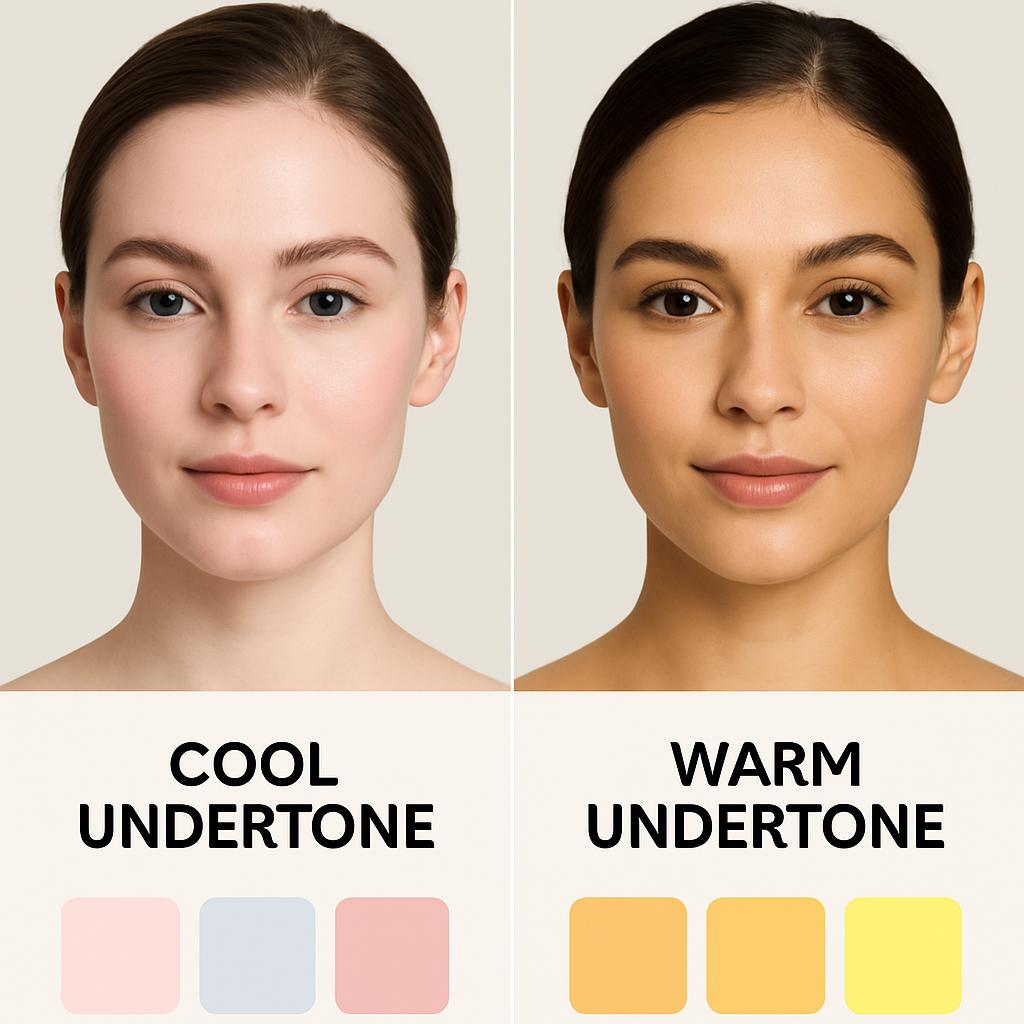
How to Tell If You’re Warm or Cool-Toned (Without Getting Confused)
If you’ve ever tried to figure out your personal color, you’ve probably come across one of the most basic questions:
Are you warm-toned or cool-toned?
It sounds simple, but in reality, this is where most people get stuck.
You might have tried looking at your veins, testing jewelry, or comparing lip colors — only to end up more confused than before.
The problem is not that these methods are wrong.
The problem is that most people are using them without understanding what they are actually looking for.
Why Undertone Matters More Than You Think
Undertone is not about how light or dark your skin is.
It’s about the subtle color that sits beneath your skin — the tone that doesn’t change easily, even when you tan or get paler.
This undertone affects how colors reflect onto your face.
Some colors will make your skin look clearer, brighter, and more even.
Others will make you look tired, dull, or slightly off — even if the color itself is trendy or expensive.
That’s why identifying your undertone is the first real step in understanding your personal color.
The Most Common Mistake
Most people try to find their undertone by focusing on just one test.
For example:
- “My veins look blue, so I must be cool-toned”
- “Gold jewelry looks good on me, so I must be warm-toned”
But in reality, no single test is 100% reliable.
Lighting, skin condition, and even camera filters can change how things look.
That’s why you should never rely on just one method.
Instead, you should look for a pattern.
Test 1: The Jewelry Test (Simple but Not Perfect)
Try wearing both gold and silver jewelry in natural light.
Ask yourself:
- Does gold make your skin look warmer and healthier?
- Does silver make your skin look brighter and clearer?
If gold blends in naturally, you may lean warm.
If silver looks more harmonious, you may lean cool.
But remember — this is just one clue.
Test 2: The Fabric Test (More Reliable)
Hold different colored fabrics near your face.
Try comparing:
- Warm colors: beige, peach, warm brown
- Cool colors: gray, icy pink, cool blue
Look at your face, not the fabric.
Ask:
- Does your skin look smoother and more even?
- Do dark circles or redness become more noticeable?
The right undertone will make your skin look more balanced without effort.
Test 3: The “Tired vs Fresh” Check
This is one of the most practical ways to tell.
Wear different colored tops and observe how your face looks throughout the day.
Some colors will make you look:
- more awake
- more put-together
- naturally healthier
Others will make you look:
- slightly tired
- uneven
- harder to style
The difference is often subtle, but once you notice it, you won’t be able to ignore it.
What If You Feel Like You’re Both?
Many people don’t fit perfectly into warm or cool.
You might feel like:
- gold and silver both work
- some warm colors look good, but not all
- some cool colors look okay, but not amazing
This usually means you are closer to a neutral undertone.
And that’s completely normal.
In fact, neutral types often have more flexibility — but they still have a “better direction” once you look closely.
A Simpler Way to Think About It
Instead of trying to label yourself too quickly, think in terms of:
👉 Which colors make your skin look healthier without effort?
That’s the only thing that really matters.
Final Thoughts
Finding your undertone is not about passing a test.
It’s about noticing patterns in how your skin reacts to color.
Once you start seeing those patterns, everything becomes easier:
- choosing clothes
- picking makeup
- building a consistent style
And most importantly, you stop guessing.
Leave a Reply