Personal Color vs Skin Tone: What’s the Difference (And Why It Matters More Than You Think)
There’s a moment most people go through at some point.
You start paying attention to beauty, maybe skincare, maybe makeup—and suddenly you hear two terms over and over again:
Skin tone.
Personal color.
At first, they sound like the same thing.
And honestly, a lot of people use them interchangeably.
But the truth is, they’re not the same at all.
And understanding the difference changes how you see everything—from makeup to clothes to even how you perceive your own face.
What Skin Tone Actually Means
Let’s start with the simpler one.
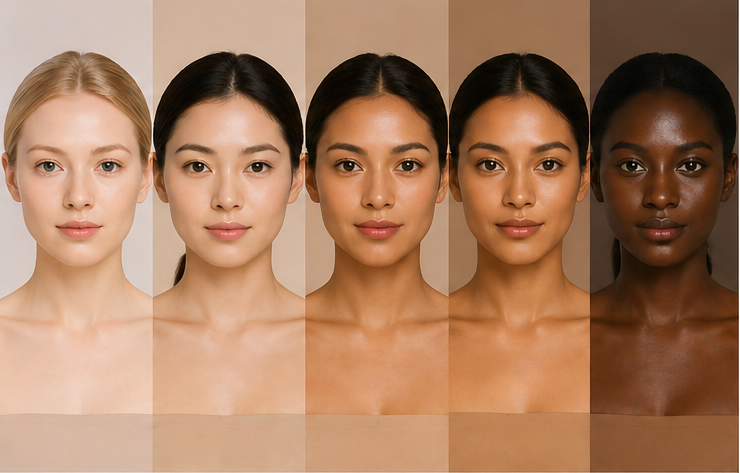
Skin tone refers to the surface color of your skin.
It’s what you see immediately when you look in the mirror.
Usually, it’s described in terms like:
- fair
- light
- medium
- tan
- deep
It can change over time.
Sun exposure, seasons, even lifestyle can affect it.
You might look lighter in winter and slightly darker in summer.
That’s completely normal.
Skin tone is visible, and it’s flexible.
Then What Is Personal Color?
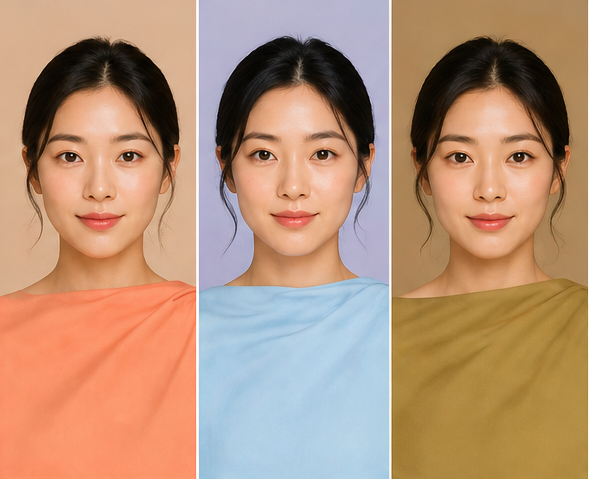
Personal color goes deeper.
It’s not about how light or dark your skin is.
It’s about how color interacts with your natural features.
That includes:
- undertone
- contrast between your skin, hair, and eyes
- how your face reflects and responds to color
This is why two people with similar skin tone can look completely different in the same color.
Because their personal color is different.
The Biggest Misunderstanding
Here’s where most people get confused.
They assume:
👉 “If I have light skin, I should wear light colors.”
👉 “If I have darker skin, I should wear deeper colors.”
But it doesn’t work like that.
Skin tone doesn’t decide what suits you.
Undertone and harmony do.
You can have light skin and still suit deep, bold colors.
You can have darker skin and look amazing in soft pastels.
The surface color doesn’t tell the whole story.
Why Two People Can Look Completely Different in the Same Outfit
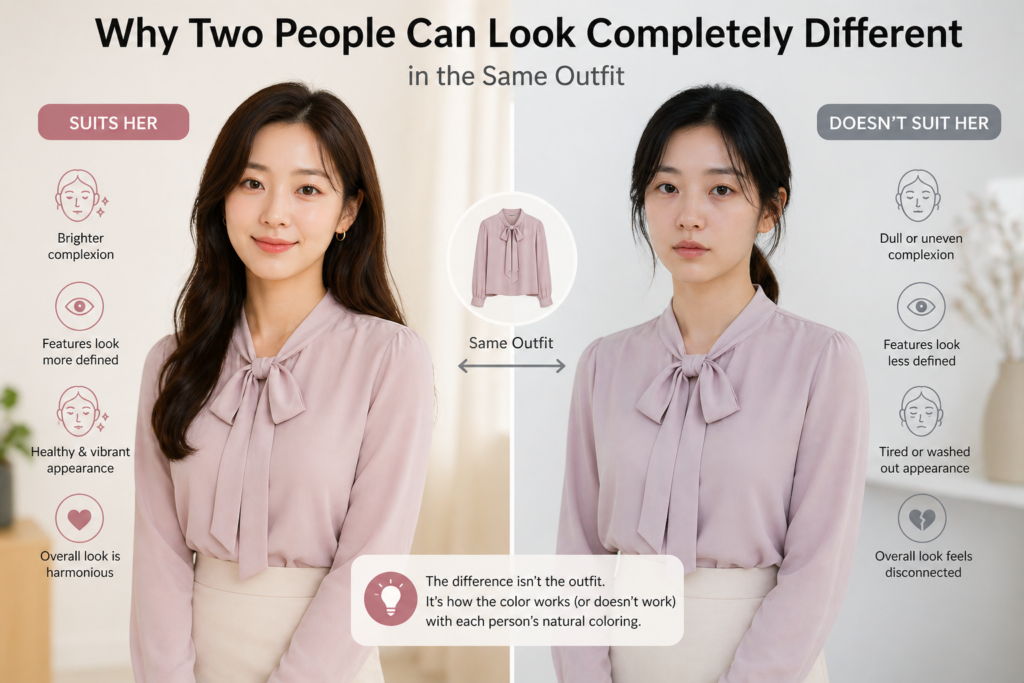
You’ve probably seen this happen.
Two people wear the exact same color.
On one person, it looks effortless.
On the other, something feels slightly off.
Not bad. Just… not right.
That difference comes from personal color.
When a color matches someone’s undertone and overall balance, it blends naturally.
When it doesn’t, it creates contrast that doesn’t support the face.
And that’s when the “off” feeling appears.
Skin Tone Changes. Personal Color Stays
This is another key difference.
Your skin tone can change.
But your personal color usually stays consistent.
You might tan, get lighter, or experience changes over time.
But your undertone and natural harmony don’t suddenly shift.
That’s why something that suits you now will likely continue to suit you later.
And something that doesn’t… probably never will.
Why This Matters in Real Life
At first, this sounds like a small detail.
But it affects almost every decision you make.
Makeup shades.
Clothing colors.
Hair color choices.
Without understanding personal color, people often rely on trends or guesswork.
And that leads to frustration.
You buy something because it looks good on someone else.
But it doesn’t feel the same on you.
Understanding the difference removes that confusion.
The Subtle Confidence Shift
Here’s something people don’t talk about enough.
When you wear colors that truly suit you, the change isn’t just visual.
It’s internal.
You feel more comfortable.
More natural.
Less like you’re trying too hard.
It’s not about looking perfect.
It’s about feeling aligned.
So Which One Should You Focus On?
Both matter—but in different ways.
Skin tone helps you understand:
- base makeup shades
- foundation matching
Personal color helps you understand:
- what makes you look better overall
- what enhances your natural features
If you had to choose one for overall appearance?
👉 Personal color matters more.
Final Thoughts
Skin tone tells you what your skin looks like.
Personal color tells you what works with it.
And once you understand that difference, things become much clearer.
You stop guessing.
You stop following trends blindly.
And you start making choices that actually feel right for you.
Not because someone said so.
But because you can see the difference yourself.
Leave a Reply