Why Certain Colors Make You Look Tired (Even If You’re Not)
Have you ever looked in the mirror and thought you looked unusually tired—despite getting enough sleep?
Not exhausted. Not sick. Just… off.
Your skin looks dull.
Your under-eye area seems darker than usual.
Your face doesn’t look as fresh as it normally does.
And naturally, you start questioning everything else.
Maybe it’s your skincare.
Maybe it’s stress.
Maybe it’s just one of those days.
But sometimes, the real reason is much simpler.
👉 It’s the color you’re wearing.
It’s Not Your Skin—It’s the Reflection
One of the biggest misunderstandings is thinking that your skin itself has changed.
In many cases, it hasn’t.
What has changed is how light interacts with your face.
The color you wear reflects light upward—directly onto your skin.
And depending on that color, it can either:
- brighten your complexion
- or emphasize shadows and uneven tones
That’s why the difference can feel so sudden.
You didn’t change.
The reflection did.
When a Color Works Against You
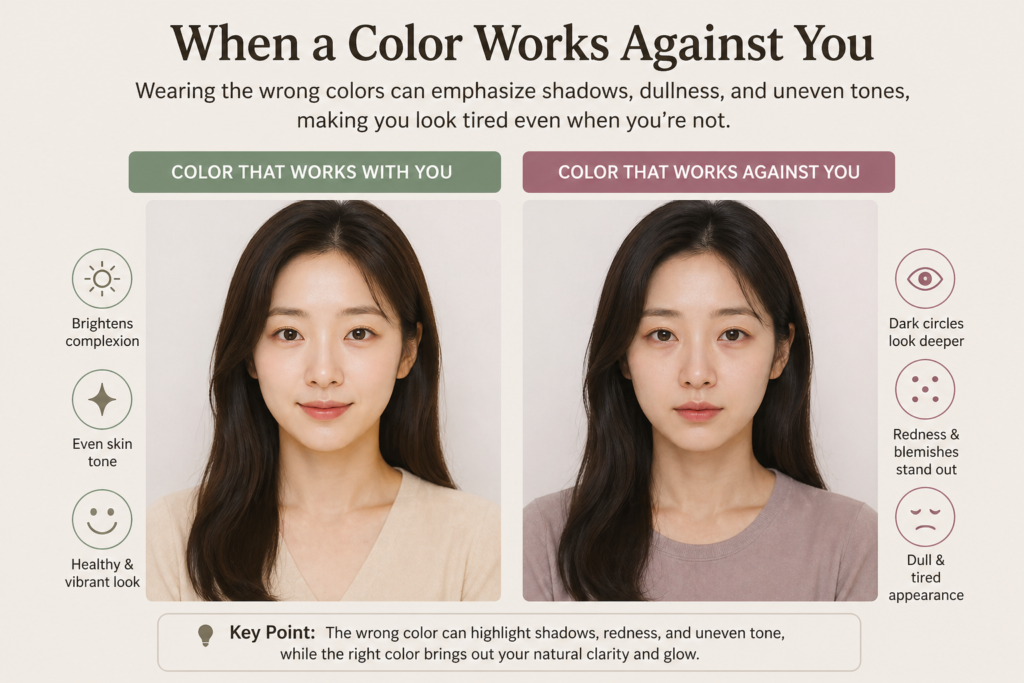
Not all colors are neutral.
Some actively work against your natural tone.
When that happens, you might notice subtle but uncomfortable changes:
- your skin looks slightly grey or dull
- redness becomes more noticeable
- dark circles appear deeper
- your overall expression looks more tired
These effects are often small on their own.
But together, they create a noticeable difference.
And because the change is gradual, it’s easy to misinterpret.
Why “Trendy Colors” Don’t Always Work
A common trap is assuming that popular colors will look good on everyone.
But trends don’t consider individual tone.
A color that looks amazing on one person can look completely different on someone else.
For example:
- a muted beige might look elegant on someone
- but make another person look washed out
- a bold cool pink might look fresh on one person
- but too harsh on someone with a warmer tone
The problem isn’t the color itself.
It’s the mismatch.
The Role of Undertone
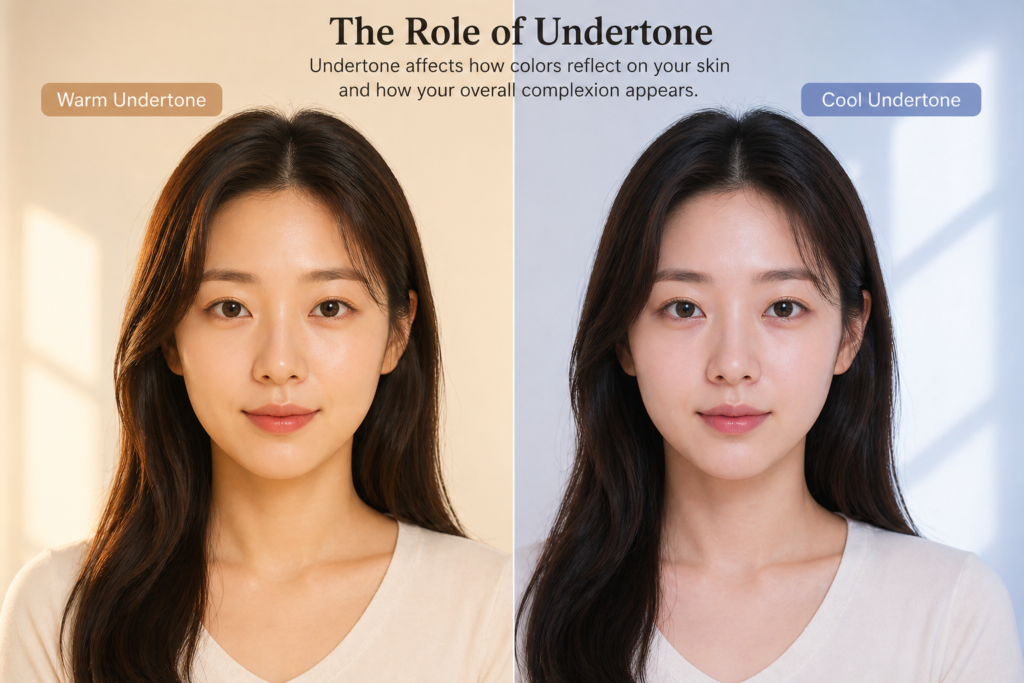
Undertone plays a major role in how color affects your appearance.
If your undertone is warm, cool-toned colors can create contrast that feels unnatural.
If your undertone is cool, warm shades can make your skin look uneven or slightly off.
This mismatch is often what creates that “tired” look.
Not because your skin is unhealthy—but because the color isn’t in harmony with it.
Brightness and Depth Mismatch
Even if the undertone is correct, other factors still matter.
Some people suit soft, muted colors.
Others look better in bright, high-contrast shades.
If the color is too:
- dull → your face may lose definition
- bright → your features may look overwhelmed
- light → your face may appear washed out
- dark → your face may look heavier or shadowed
Again, nothing is wrong with your face.
It’s just a mismatch between your features and the color.
Why You Notice It in Photos First
Interestingly, many people first notice this issue in photos.
You look fine in the mirror.
But in pictures, something feels off.
That’s because cameras capture contrast more sharply.
Colors that slightly mismatch in real life can appear much stronger in photos.
So the effect becomes more obvious.
The Subtle Difference Between “Tired” and “Off”
Here’s an important distinction.
Sometimes, what we call “looking tired” isn’t actually tiredness.
It’s simply a lack of harmony.
Your face isn’t supported by the color you’re wearing.
And that creates a visual imbalance.
Once you understand this, you start seeing the difference clearly.
What Actually Helps
The goal isn’t to avoid colors completely.
It’s to recognize patterns.
Start paying attention to:
- which colors make your skin look clearer
- which ones make you look more alive
- which ones feel slightly uncomfortable
Over time, these patterns become obvious.
And once you see them, your choices become easier.
Why This Matters More Than You Expect
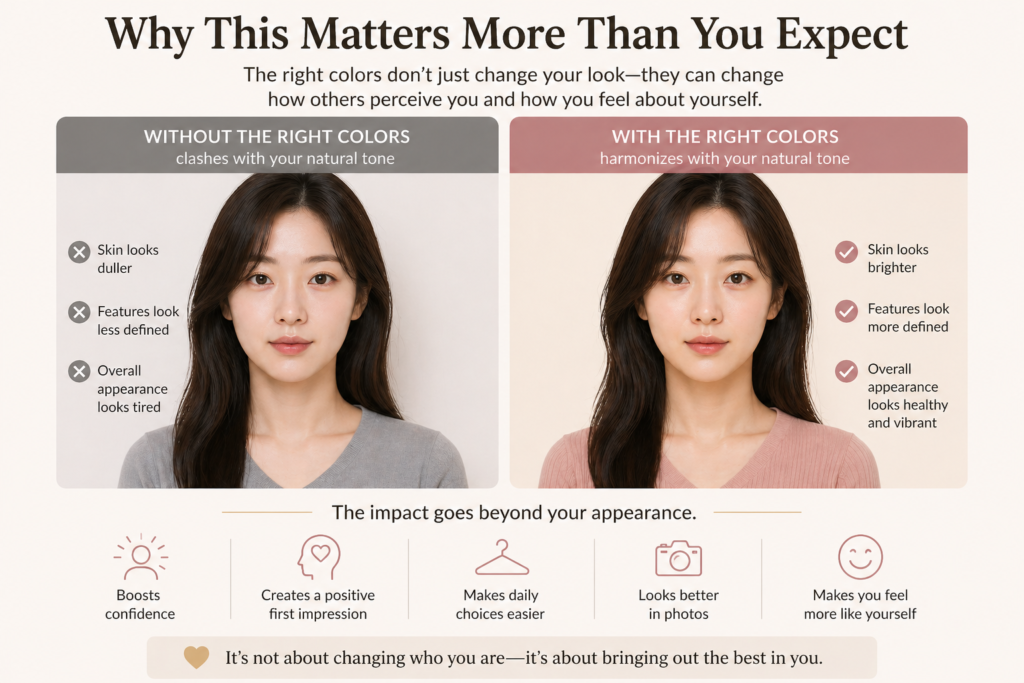
At first, this seems like a small detail.
But it affects how you present yourself every day.
You don’t need more products.
You don’t need drastic changes.
Sometimes, just choosing the right color makes a visible difference.
Not because it transforms you.
But because it allows your natural features to show more clearly.
Final Thoughts
Looking tired isn’t always about lack of sleep.
Sometimes, it’s about lack of harmony.
The colors around your face matter more than most people realize.
And once you start noticing how they affect you, it changes the way you see everything—from clothes to makeup to everyday choices.
Not in a complicated way.
But in a way that feels clearer, more intentional, and more natural.
Leave a Reply