Black is probably the most trusted color in fashion.
People wear black when they want to look elegant, slimmer, sophisticated, modern, or effortless. It is considered timeless, safe, and easy to style. Open almost any closet and there is a good chance black takes up a large percentage of it.
But despite its reputation, black does not actually flatter everyone equally.
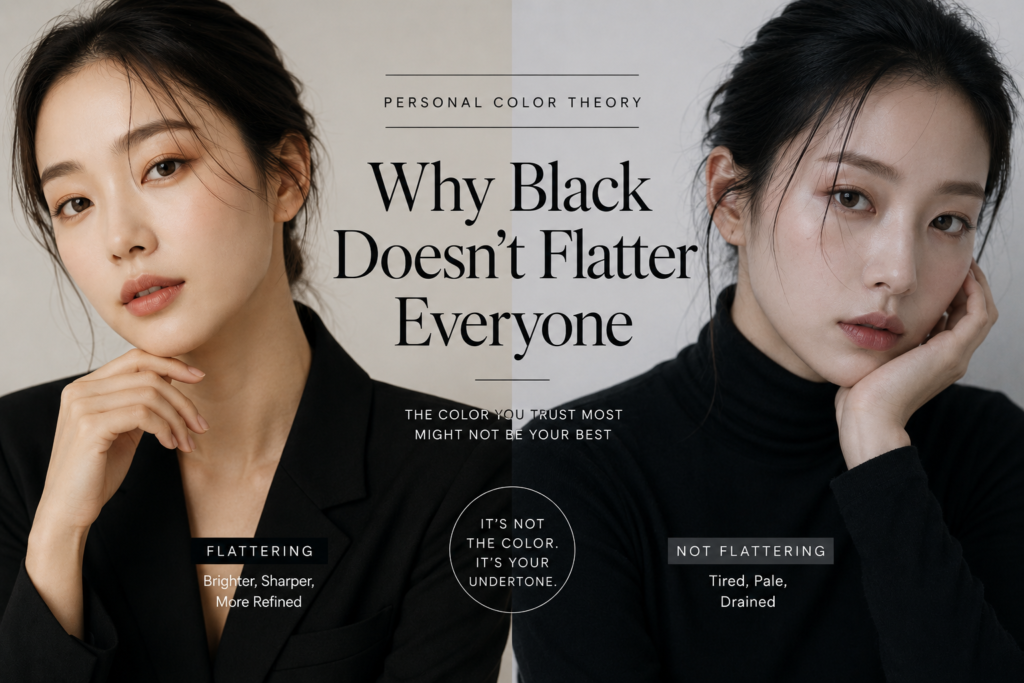
Some people wear black and instantly look sharper, brighter, and more refined. Others suddenly appear tired, pale, older, or strangely drained — even though the outfit itself is beautiful.
This difference is one of the most interesting parts of personal color theory.
Why Black Changes the Face So Much
Black creates very strong contrast.
When placed near the face, it affects how light reflects onto the skin. Depending on your natural undertones and facial contrast, that effect can either enhance your features or overwhelm them.
For people with naturally cool or high-contrast coloring, black often looks striking and balanced.
It can make:
- the eyes appear clearer
- facial structure look sharper
- skin appear cleaner
- makeup stand out beautifully
This is why some people seem to come alive wearing black turtlenecks, black eyeliner, or dark dramatic outfits.
The color works with their natural contrast instead of against it.
Why Black Can Look Harsh
For other people, black absorbs too much light around the face.
Instead of creating balance, it can exaggerate:
- dark circles
- redness
- fine lines
- uneven texture
- shadows around the mouth
- dullness in the skin
The result is often a tired or heavy appearance.
Many warm-toned or softer-featured people notice that pure black feels slightly overpowering. Even if they love the aesthetic, something about the color can make their face look less healthy.
This is especially common under natural daylight, where undertones become more visible.
Soft Contrast vs Strong Contrast
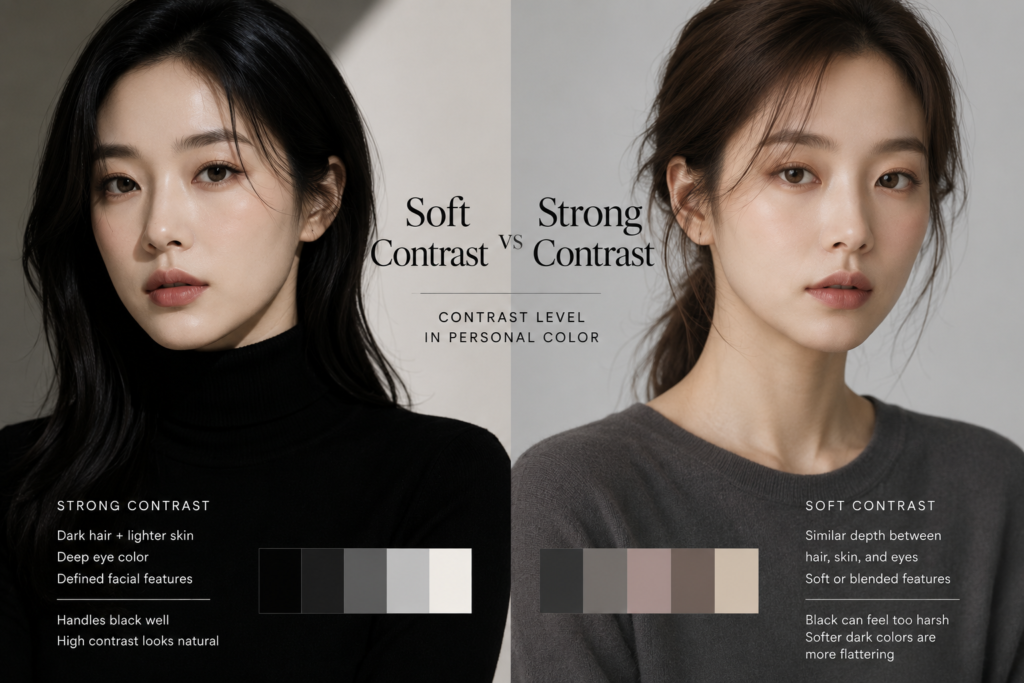
One important part of personal color is not only undertone, but contrast level.
Some people naturally have high contrast features.
For example:
- very dark hair with lighter skin
- deep eye color
- naturally defined facial features
These people usually handle black well because their features already contain strong contrast naturally.
Meanwhile, people with softer coloring often look better in muted or gentler shades.
For them, softer dark colors may feel much more flattering than true black.
Better Alternatives to Pure Black
Many people are surprised to realize they do not actually dislike dark clothing.
They simply dislike harsh black near their face.
In many cases, replacing pure black with softer deep tones creates a huge difference.
Some popular alternatives include:
- charcoal gray
- espresso brown
- deep olive
- muted navy
- soft cocoa
- dark taupe
These shades still feel elegant and versatile, but they create less harsh contrast against the skin.
Sometimes the face immediately looks more rested after making this small switch.
Makeup Also Affects How Black Looks
Makeup changes the relationship between black clothing and the face.
People who naturally look overwhelmed by black sometimes balance it better with:
- stronger lip color
- more defined eyeliner
- added warmth in blush
- slightly deeper brows
Meanwhile, people with naturally strong contrast may not need much makeup at all for black to look harmonious.
This is why black can feel dramatically different depending on styling.
Hair Color Plays a Big Role Too
Hair color strongly influences whether black looks balanced.
Cool deep hair colors often pair naturally with black clothing.
But softer golden, warm brown, or light hair colors sometimes clash slightly with harsh black fabric near the face.
This is one reason some people suddenly stop enjoying black after changing their hair color.
The clothing did not change — but the harmony around the face did.
Why Black Became a “Safe” Fashion Color
Even though black is not universally flattering, it became popular because it offers psychological safety in fashion.
Black feels:
- polished
- minimal
- easy to coordinate
- visually slimming
- socially versatile
People often wear black because it reduces decision fatigue.
But personal color theory reminds us that “easy to style” is not always the same as “most flattering.”
For some people, warm beige or navy may actually make them look far healthier than black ever could.
The Emotional Side of Color
Interestingly, colors also affect mood and perception.
Black can feel powerful, elegant, mysterious, or serious. That emotional association is part of why people continue wearing it even if it is not technically their best color.
Personal style is never only about strict harmony.
Sometimes people intentionally wear dramatic or difficult colors because they love the feeling those colors create.
And that is completely fine.
Personal Color Is About Awareness
The goal of personal color is not banning colors from your wardrobe.
It is simply understanding how colors interact with your natural features.
Once people notice how black affects their face, they often start experimenting more carefully with:
- softer dark tones
- different makeup balance
- jewelry colors
- hair tone adjustments
- neckline placement
Sometimes even moving black slightly farther from the face can help.
For example, black pants may feel perfect while black turtlenecks feel overwhelming.
Small differences matter more than people expect.
And once you start seeing how color changes the face, fashion begins to feel much more intentional instead of random.
Leave a Reply