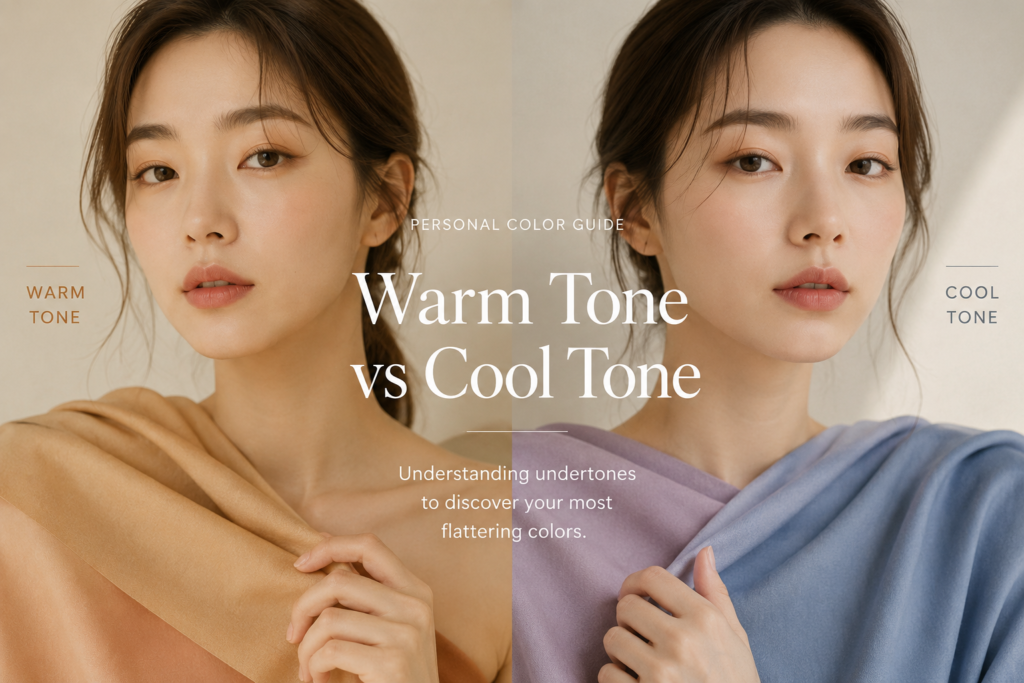
One of the most confusing things about personal color is the idea of warm tones and cool tones.
Almost everyone has heard those words before, but many people still feel unsure about what they actually mean. Some assume warm tone simply means having yellow skin, while cool tone means having pale skin. Others try online tests and end up even more confused because the results seem inconsistent.
The truth is that undertones are usually more subtle than people expect.
Warm tone and cool tone are not really about how light or dark your skin is. They are about the natural color balance underneath the surface of your skin.
Once you understand that difference, personal color starts becoming much easier to recognize.
Your Skin Has an Invisible Undertone
Even though skin may appear beige, tan, fair, or deep on the surface, underneath there is often a hidden temperature to the coloring.
Some skin has warmer golden or peachy undertones.
Other skin has cooler pink, rosy, or bluish undertones.
This hidden balance affects how colors interact with your face.
That is why two people with similar skin depth can look completely different wearing the exact same lipstick or shirt.
The color itself is reacting differently to their undertones.
What Warm Tones Usually Look Like
Warm-toned people often look healthier and brighter in earthy or golden shades.
Their skin tends to harmonize naturally with colors like:
- camel
- cream
- olive
- coral
- peach
- warm brown
- terracotta
- gold jewelry
Warm tones usually create a softer and warmer overall impression.
Some warm-toned people notice that icy colors make them look tired, pale, or slightly gray. In contrast, warmer shades often make their skin appear smoother and more alive.
Hair color also matters here. Warm-toned people often suit honey brown, caramel, chestnut, or warm auburn shades particularly well.
What Cool Tones Usually Look Like
Cool-toned people often shine in clearer, cooler colors.
They usually look best in:
- bright white
- cool gray
- navy
- icy pink
- berry shades
- lavender
- blue-based red
- silver jewelry
Cool undertones tend to create a cleaner, sharper appearance.
When cool-toned people wear heavily yellow or orange-based colors, the skin can sometimes appear dull or uneven.
On the other hand, cool shades often make the complexion look clearer and more refined.
Cool-toned people frequently suit ash brown, cool black, or deep espresso hair colors better than strongly golden shades.
Why Jewelry Tests Became Popular
One reason the gold versus silver test became so common is because metal tones often reveal undertones surprisingly well.
Warm-toned people usually look more balanced and glowing in gold jewelry.
Cool-toned people often appear brighter and more polished in silver.
However, this is not a perfect science.
Lighting, fake tan, makeup, hair color, and even clothing nearby can affect the result. Some people also have neutral undertones and can wear both relatively well.
That is why personal color works best when multiple clues are considered together rather than relying on one test alone.
Neutral Undertones Exist Too
Not everyone fits perfectly into warm or cool categories.
Some people have neutral undertones, meaning they sit somewhere between both extremes.
These people often notice:
- both gold and silver look acceptable
- very warm colors feel overwhelming
- very icy colors feel harsh
- muted balanced tones look best
Neutral undertones are more common than many people realize.
This is also why personal color can feel confusing online. Real human coloring is usually more complex than simple charts and quizzes suggest.
Why Certain Colors Make You Look Better Instantly
Have you ever worn a color that suddenly made your face look healthier without changing your makeup?
That is often color harmony at work.
The right tones can:
- soften shadows
- reduce the appearance of redness
- brighten the complexion
- make the eyes appear clearer
- create a healthier overall impression
Meanwhile, the wrong tones can exaggerate tiredness, uneven texture, or dullness.
This effect is especially noticeable near the face, which is why tops, scarves, makeup, and hair color matter so much in personal color analysis.
Why Trends Do Not Work Equally on Everyone
Every year, certain makeup or fashion shades become trendy.
One season everyone wears cool mauve lipstick. Another year warm beige dominates fashion. Sometimes icy silver makeup becomes popular, while other times soft peach tones take over beauty trends.
But trends do not automatically suit everyone.
This is one reason people often buy popular products online and feel disappointed afterward. The item itself may be beautiful, but the undertone may not harmonize with their own coloring.
Personal color helps explain why this happens.
Personal Color Is About Harmony, Not Rules
A lot of people become intimidated by personal color because social media sometimes treats it like strict beauty law.
But personal color is not meant to limit self-expression.
It is simply a tool for understanding which shades naturally work with your features.
You do not need to throw away your wardrobe or avoid your favorite colors forever. Many people successfully wear difficult colors by adjusting makeup, hair color, or accessories.
The goal is not perfection.
The goal is understanding why certain colors naturally make you look fresher, softer, brighter, or more balanced.
Once people start recognizing this effect, they often notice it everywhere — in fashion, makeup, celebrity styling, photography, and even interior design.
Because color changes much more than people think.
Leave a Reply