There’s a reason Korean skincare became a global obsession instead of just another beauty trend.
People first noticed the glowing skin. Then came the lightweight textures, calming ingredients, soft makeup looks, and the almost unbelievable before-and-after transformations flooding social media.
But once the excitement settles, a bigger question appears:
Why does Korean skincare actually feel so different?
Not just in packaging or trends—but in philosophy itself.
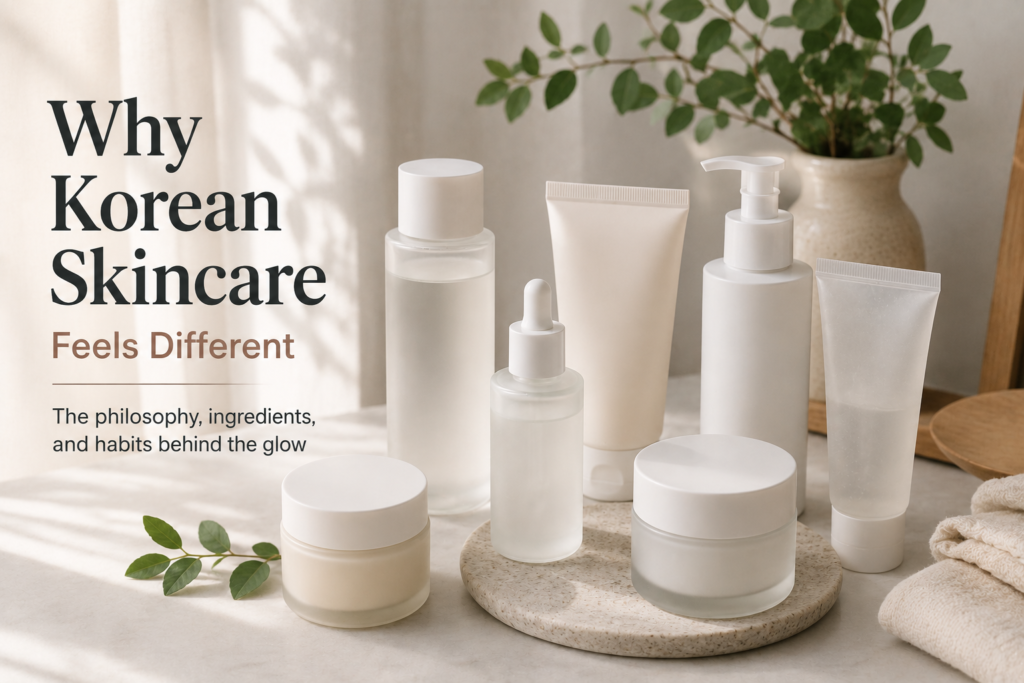
Because Korean skincare was never really built around covering problems quickly. It evolved around maintaining skin long before it reaches a crisis point.
And that subtle difference changes everything.
Korean Skincare Focuses on Prevention More Than Correction
In many Western beauty routines, skincare often becomes reactive.
A breakout appears, so people search for strong acne treatments. Skin becomes dry, so they use heavier creams. Pigmentation shows up, and suddenly powerful resurfacing products enter the routine.
Korean skincare tends to approach skin differently.
Instead of aggressively fixing visible damage later, the focus is often on maintaining hydration, protecting the barrier, calming inflammation early, and supporting long-term skin balance before major issues appear.
That’s one reason Korean routines often emphasize:
- gentle cleansing
- hydration layers
- daily sunscreen
- soothing ingredients
- consistency over intensity
The goal is usually not dramatic overnight transformation.
It’s healthier skin over time.
And interestingly, this philosophy aligns closely with what many dermatologists now recommend globally.
The “Glass Skin” Trend Was Never Really About Perfection
Outside Korea, people often misunderstood trends like “glass skin.”
Many assumed it meant flawless skin with no pores, no texture, and unrealistic perfection.
But the original idea was more about skin health.
Hydrated skin. Calm skin. Light-reflective skin. Skin that looks balanced and well-maintained rather than heavily covered.
This is why Korean skincare products often focus heavily on hydration and barrier support instead of extremely harsh exfoliation.
Ingredients like:
- centella asiatica
- snail mucin
- ceramides
- hyaluronic acid
- rice extract
- green tea
became globally popular because they support calmer, healthier-looking skin instead of constantly attacking it.
And for many people—especially those with sensitive or dehydrated skin—that softer approach feels noticeably different.
Korean Beauty Culture Is Deeply Connected to Daily Habits
Another reason Korean skincare feels unique is because skincare in Korea is often treated as part of lifestyle, not just beauty.
Sleep, hydration, diet, stress, UV protection, and even indoor humidity are commonly discussed alongside skincare products themselves.
Sun protection, for example, is taken extremely seriously. Many people wear sunscreen daily regardless of weather, season, or indoor schedules because preventing pigmentation and premature aging is considered easier than correcting it later.
There’s also a stronger cultural focus on consistency.
Not dramatic treatments once a month—but small habits repeated daily.
That includes:
- carrying sunscreen for reapplication
- using hydrating toners regularly
- avoiding over-cleansing
- prioritizing barrier health
- paying attention to skin condition changes early
This long-term mindset shapes the entire industry.
Why Korean Products Often Feel Lighter
A lot of first-time users notice something immediately:
Korean skincare textures usually feel lighter.
Creams absorb faster. Sunscreens feel less heavy. Hydrating toners feel watery instead of thick. Makeup tends to sit more naturally on the skin.
Part of this comes from climate and beauty preferences. In humid environments, lightweight layering often feels more comfortable than thick heavy products.
But it also reflects a different skincare philosophy.
Instead of relying on one extremely strong product, Korean skincare often builds hydration and support gradually through multiple lighter layers.
This layering approach allows people to adjust routines depending on weather, sensitivity, hormones, or seasonal skin changes.
It’s flexible rather than aggressive.
Korean Skincare Isn’t Automatically Better—Just Different
At this point, Korean skincare has become so popular that some people treat it like a magic solution.
But realistically, no skincare system works perfectly for everyone.
Some people love layered hydration. Others prefer simpler minimalist routines. Some skin conditions still require prescription treatments or stronger dermatological care.
The real reason Korean skincare became influential is not because every product is perfect.
It’s because it shifted the conversation globally toward something gentler:
skin barrier health, hydration, prevention, and sustainable routines.
And honestly, many people’s skin responds surprisingly well once routines become less aggressive.
The Real Lesson Behind Korean Skincare
The most valuable part of Korean skincare may not be a specific ingredient or product.
It’s the mindset behind it.
Healthy skin is usually built slowly.
Not through panic-buying dozens of harsh products after every breakout. Not through constantly stripping the skin in search of perfection. But through routines that support the skin consistently over time.
That’s why Korean skincare often feels calmer.
Less focused on “fixing flaws immediately.” More focused on maintaining skin before problems become severe.
And in a world where skincare trends constantly push extremes, that quieter philosophy may actually be the reason it connected with so many people globally.
Leave a Reply