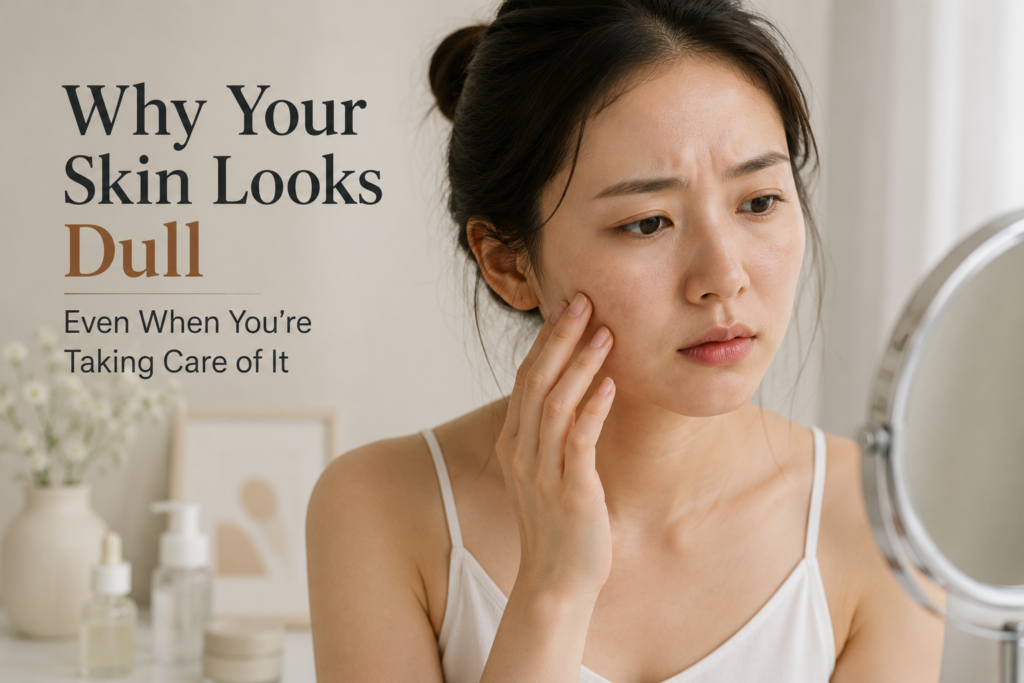
There’s a specific kind of frustration that happens when you’re actually trying.
You drink more water. You bought the skincare products everyone recommended. You moisturize consistently, wear sunscreen, maybe even upgraded your cleanser and serum.
And yet your skin still looks… tired.
Not necessarily acne-prone. Not severely dry. Just dull. Flat. Like your face has lost that healthy, fresh-looking glow no matter how much skincare you use.
A lot of people immediately assume they need stronger products or more expensive routines. But dull-looking skin is rarely caused by one dramatic problem.
More often, it’s the result of small things building up quietly over time.
And interestingly, some of those things have nothing to do with skincare itself.
Dull Skin Is Usually About Light, Not Just Color
When people describe “glowy” skin, they are often talking about the way skin reflects light.
Healthy-looking skin tends to reflect light more evenly. Dull skin, on the other hand, scatters light irregularly because the surface has become rough, dehydrated, congested, or stressed.
That’s why skin can technically be healthy but still look tired.
A weakened skin barrier, dead skin buildup, dehydration, lack of sleep, stress, or even indoor air can all affect how bright the skin appears. And because these changes happen gradually, people often don’t notice them immediately.
They just wake up one day feeling like their face looks different.
Overdoing Skincare Can Make Skin Look Worse
One of the biggest modern skincare mistakes is assuming more products automatically mean better skin.
In reality, overloaded routines often create the opposite effect.
Too many exfoliants, strong active ingredients, harsh cleansers, and constant product switching can irritate the skin barrier. Instead of looking clearer and brighter, the skin starts looking inflamed, dehydrated, or uneven.
Ironically, people often respond by adding even more products.
But skin that looks dull is frequently skin that’s overwhelmed.
Dermatologists often simplify routines when skin starts reacting badly. Gentle cleansing, hydration, barrier repair, and sunscreen tend to matter more than complicated ten-step systems.
Sometimes your skin doesn’t need more correction.
It needs recovery.
Dehydration Changes the Way Your Skin Looks
A lot of people confuse dry skin with dehydrated skin.
Dry skin lacks oil. Dehydrated skin lacks water.
And dehydrated skin can happen to anyone—even people with oily skin.
When the skin is dehydrated, it often loses that healthy reflective quality. Fine lines become more noticeable, makeup sits unevenly, and the skin can start looking tired by the middle of the day.
This is especially common in people who spend long hours indoors under air conditioning or heating. The environment slowly pulls moisture from the skin, even if you’re using skincare regularly.
That’s why some people notice their skin looks better on vacation near the ocean or during humid weather. Their skin barrier is finally holding onto moisture properly again.
Hydration affects appearance more than most people realize.
Sleep and Stress Show Up on the Face Fast
People often underestimate how visible stress becomes on the skin.
Poor sleep, emotional exhaustion, and chronic stress affect circulation, inflammation, hydration, and oil balance. Skin may start looking dull not because your products stopped working, but because your body is under pressure.
This is why even expensive skincare sometimes seems ineffective during stressful periods.
Your skin reflects your overall condition more than people think.
And unfortunately, tired skin doesn’t always improve with makeup. In fact, heavy makeup can sometimes emphasize rough texture and dryness even more.
Healthy-looking skin usually comes from consistency outside the bathroom too:
better sleep, enough hydration, movement, less stress, and routines that are sustainable instead of extreme.
The Hidden Role of Sun Damage
One of the most common causes of dullness is gradual sun exposure.
Not necessarily sunburn—just daily exposure over time.
UV rays affect collagen, pigmentation, texture, and skin tone long before visible aging appears. This often creates unevenness that people describe as “tired skin” or “lost glow.”
And because sun damage builds slowly, people rarely connect it to their current skin concerns.
Daily sunscreen becomes important here not just for anti-aging, but for maintaining brightness and even tone over time.
Skin that is consistently protected usually maintains clarity longer.
What Actually Helps Skin Look Healthier Again
The solution to dull skin is rarely aggressive.
Usually, it’s about restoring balance.
Gentle cleansing. Consistent hydration. Enough sleep. Barrier-supportive products. Daily sunscreen. Less over-exfoliation. Less panic-buying. More consistency.
And importantly, patience.
Skin often improves slowly before it improves dramatically.
That’s why people who suddenly simplify their routines sometimes notice something surprising after a few weeks:
their skin starts looking calmer, brighter, and healthier again—not because they added something revolutionary, but because they stopped overwhelming it.
Healthy-looking skin is not always the result of doing more.
Very often, it’s the result of finally doing enough… consistently.
Leave a Reply