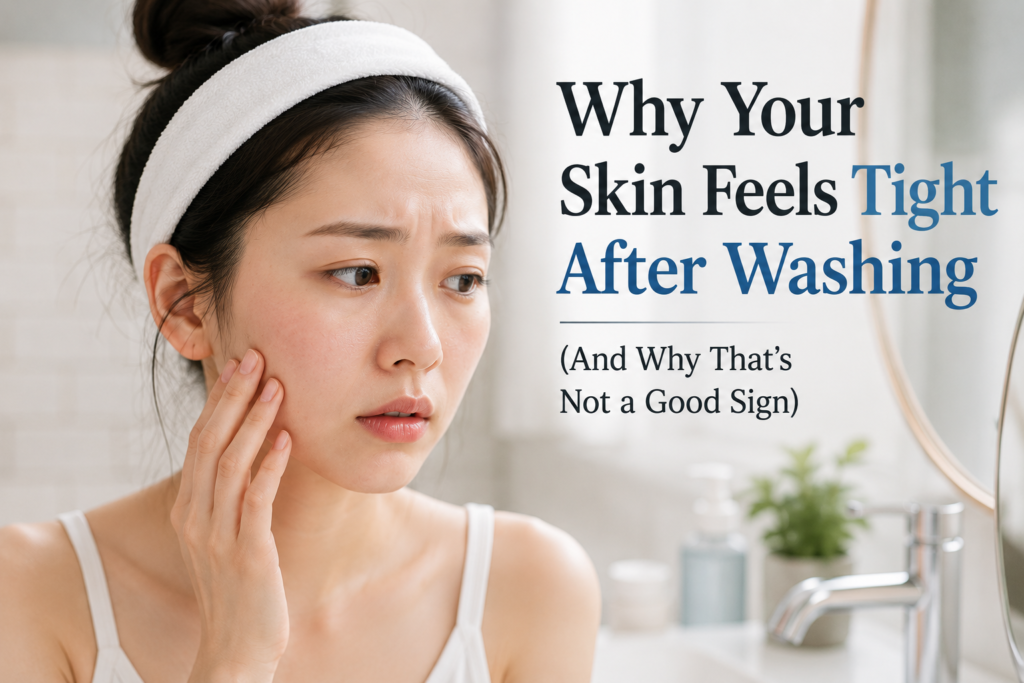
A lot of people think that “tight” skin after cleansing means their face is extra clean.
Fresh. Purified. Oil-free.
But dermatologists usually see it differently.
That tight, stretched feeling after washing your face is often one of the earliest signs that your skin barrier is struggling. And ironically, the cleaner your skin feels, the more likely it is that your cleanser removed too much.
For years, skincare marketing convinced people that squeaky-clean skin was the goal. Foamy cleansers, strong exfoliants, alcohol-heavy toners—everything was designed to make skin feel stripped and matte.
Now, skin experts are moving in the opposite direction.
Because healthy skin is not supposed to feel painfully tight after cleansing.
It’s supposed to feel comfortable.
The Problem With “Over-Clean” Skin
Your skin naturally produces oil for a reason.
Sebum is not automatically bad. In the right amount, it helps protect the skin barrier, maintain hydration, and reduce irritation from the outside environment.
When cleansing removes too much oil too quickly, the skin loses part of its protective layer. Water escapes more easily, sensitivity increases, and the skin starts trying to compensate.
That’s when problems often begin.
Some people become flaky and dry. Others suddenly become oilier than before. Some experience redness, irritation, or random breakouts even though they’re “taking care” of their skin more carefully than ever.
This is why skin that feels tight after washing is not always “clean skin.”
Sometimes it’s stressed skin.
Why Harsh Cleansers Feel Satisfying at First
Strong cleansers often create immediate results that feel convincing.
Your face feels smooth. Makeup disappears quickly. Oil is completely gone. Pores seem smaller for a few hours.
But that effect can be misleading.
When the skin barrier becomes repeatedly stripped, the skin often reacts by producing even more oil later. This creates the frustrating cycle many people know well:
clean → dry → oily → cleanse harder → even more imbalance.
And because the changes happen gradually, people often blame their skin instead of the routine itself.
This is especially common in people with oily or acne-prone skin. Many spend years trying to aggressively “control oil,” only to realize later that their skin was actually dehydrated underneath.
Cleansing Should Support the Skin Barrier, Not Fight It
Modern dermatology focuses heavily on barrier health.
That means cleansing should remove what the skin doesn’t need—without damaging what it does need.
Gentle, low-pH cleansers have become more popular for this reason. Instead of aggressively stripping the skin, they help maintain a healthier balance.
The goal is not zero oil.
The goal is clean skin that still feels calm afterward.
Temperature matters too. Hot water can weaken the skin barrier surprisingly fast, especially during winter or in dry climates. Lukewarm water is usually enough.
And cleansing time matters more than people think. Washing for too long or scrubbing too aggressively creates friction that irritates the skin even further.
Skin doesn’t need punishment to become healthy.
Why Your Skin Type Changes How Cleansing Feels
Dry skin usually reacts quickly to harsh cleansing. Tightness, flaking, and rough texture become noticeable almost immediately.
Oily skin can be more deceptive.
People with oily skin often think strong cleansers are helping because the immediate shine disappears. But over time, the skin may start producing even more oil to compensate for moisture loss.
Combination skin becomes even trickier because some areas feel dry while others stay oily.
And sensitive skin tends to react the fastest of all—redness, burning, or irritation often appear once the barrier becomes disrupted.
This is why one cleanser cannot work perfectly for everyone.
The best cleanser is usually the one your skin barely notices afterward.
The Modern Shift Toward “Comfort Skin”
In recent years, skincare trends have slowly shifted away from aggressive cleansing and toward something calmer.
Hydrated skin. Comfortable skin. Balanced skin.
Especially in Korean skincare and modern dermatology-based routines, the focus is often on preserving the barrier instead of constantly attacking imperfections.
This doesn’t mean cleansing is unimportant.
It means cleansing should support skin health instead of disrupting it daily.
People are starting to realize something interesting:
skin often looks healthier when it’s treated more gently.
Not ignored. Not neglected. Just less aggressively managed.
What Healthy Skin Usually Feels Like After Washing
Healthy post-cleansing skin should not feel painfully dry, itchy, or overly tight.
It should feel refreshed but still comfortable.
Soft rather than stripped.
Balanced rather than squeaky.
If your skin constantly feels stretched after washing, your cleanser may be too harsh, your water may be too hot, or your routine may simply be overwhelming your skin barrier over time.
And surprisingly, improving your skin sometimes starts with doing less.
A gentler cleanser. Shorter cleansing time. More hydration. Less over-exfoliation.
Small changes can completely change how your skin behaves.
Because in many cases, skin doesn’t become healthier when you force it harder.
It becomes healthier when you finally stop fighting it every single day.
Leave a Reply